Vinegar for Whiter Whites and Softer Towels: What Actually Works
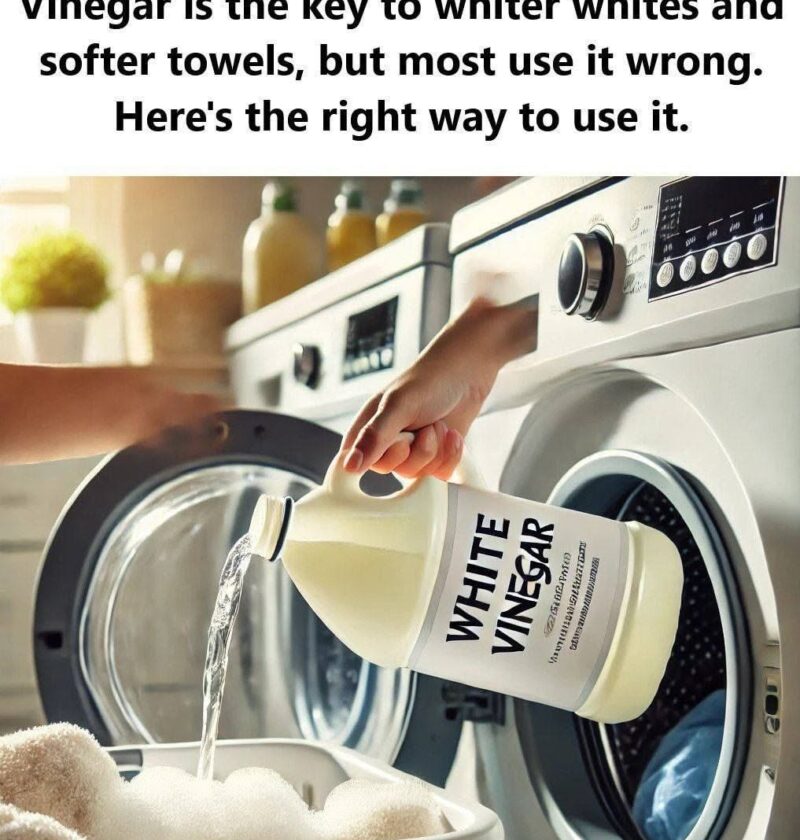
White vinegar can be useful in laundry, particularly for odor reduction and removing some residues, but the viral claim that it is a magic whitener and fabric softener needs a little correction.
For softer towels
Towels can become stiff when detergent residue builds up. Using the correct amount of detergent and avoiding overloading the washer is important. Fabric softener can actually reduce towel absorbency by coating the fibers.
W
Whirlpool
+1
Some manufacturers do allow a small amount of white vinegar as a rinse additive, but recommendations differ by washing-machine manufacturer. Whirlpool, for example, warns that repeated vinegar exposure can damage rubber seals and hoses in some machines. Check your washer’s manual first.
W
Whirlpool
For whiter clothes
For yellowed whites, vinegar can be used as a pretreatment/soak:
Check the garment’s care label.
Mix white vinegar with water.
Soak the suitable white garment for about 30 minutes to several hours.
Rinse thoroughly.
Wash normally with detergent.
Air-dry if appropriate.
Vinegar may help brighten some fabrics, but oxygen bleach or an appropriate laundry detergent is generally a better choice for significant whitening.
W
Whirlpool
+1
🚨 The most important rule
Never mix vinegar with chlorine bleach. The combination can release toxic chlorine gas. Also avoid mixing vinegar with hydrogen peroxide.
W
Whirlpool
+1
And don’t assume that more vinegar means cleaner laundry. Too much acid can damage some fabrics, particularly elastic-containing materials and delicate garments.
W
Whirlpool
Bottom line: Vinegar can be a useful laundry helper, but the safest approach is use it sparingly, preferably as a pretreatment, follow fabric-care instructions, and check your washing-machine manufacturer’s guidance before adding it to the machine.
W
Sources