The statement “New method: colonoscopy will no longer be an invasive examination” refers to emerging technologies that aim to make colorectal cancer screening easier and less invasive. However, the headline is an exaggeration: traditional colonoscopy has not disappeared, and no single new method has completely replaced it.
Why is colonoscopy considered invasive?
A standard colonoscopy involves:
- A flexible camera tube being inserted through the rectum to examine the colon.
- Bowel preparation with laxatives beforehand.
- Possible sedation.
- Removal of polyps or taking biopsies during the same procedure.
It remains one of the most effective tests because it can both detect and remove precancerous growths.
New approaches that may reduce the need for traditional colonoscopy
1. Stool-based DNA and molecular tests
Newer screening tests analyze stool samples for:
- DNA changes linked to colorectal cancer
- Blood markers
- Other biological signals
The goal is to identify people at higher risk who need colonoscopy, while allowing lower-risk people to avoid an invasive procedure.
2. Blood-based screening tests
Researchers are developing blood tests that look for:
- Cancer-related DNA fragments
- Tumor signals
- Other biomarkers
These tests are promising, but many are still being evaluated and are not yet a full replacement for colonoscopy.
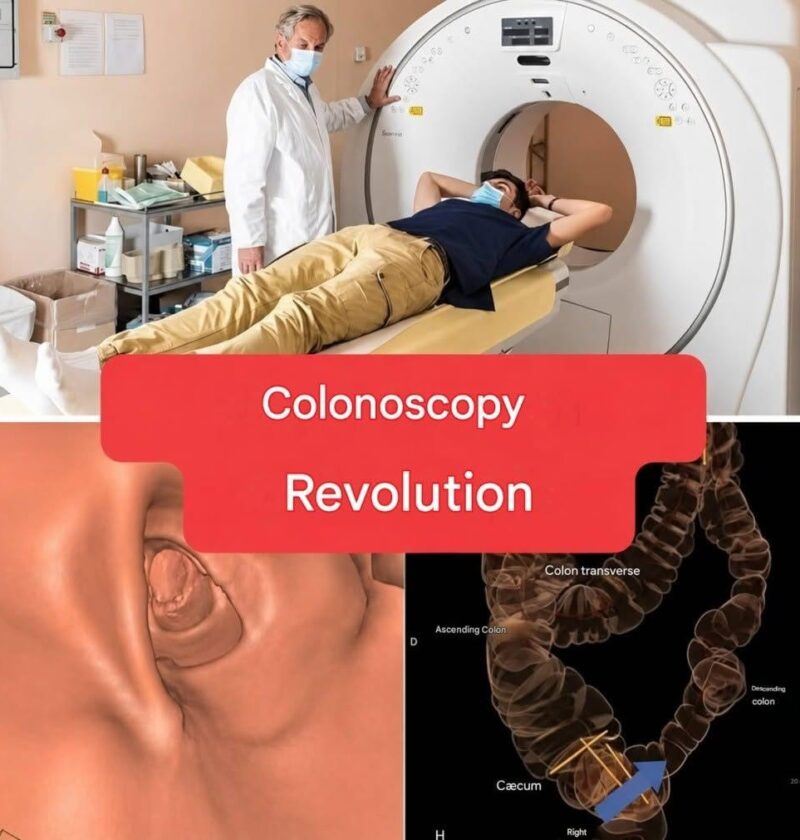
3. Virtual colonoscopy (CT colonography)
This uses CT imaging to create a view of the colon without inserting a camera.
Advantages:
- No scope inserted into the colon
- Faster procedure
Limitations:
- It cannot remove polyps.
- Abnormal findings usually require a traditional colonoscopy afterward.
4. Capsule endoscopy
A patient swallows a small camera capsule that travels through the digestive tract and takes images.
Advantages:
- Less invasive
- No tube insertion
Limitations:
- It cannot reliably replace colonoscopy for removing polyps or taking tissue samples.
5. Artificial intelligence (AI) improvements
AI systems are being used to help doctors during colonoscopy by improving detection of small polyps. This makes the procedure more accurate but does not eliminate the need for the procedure.