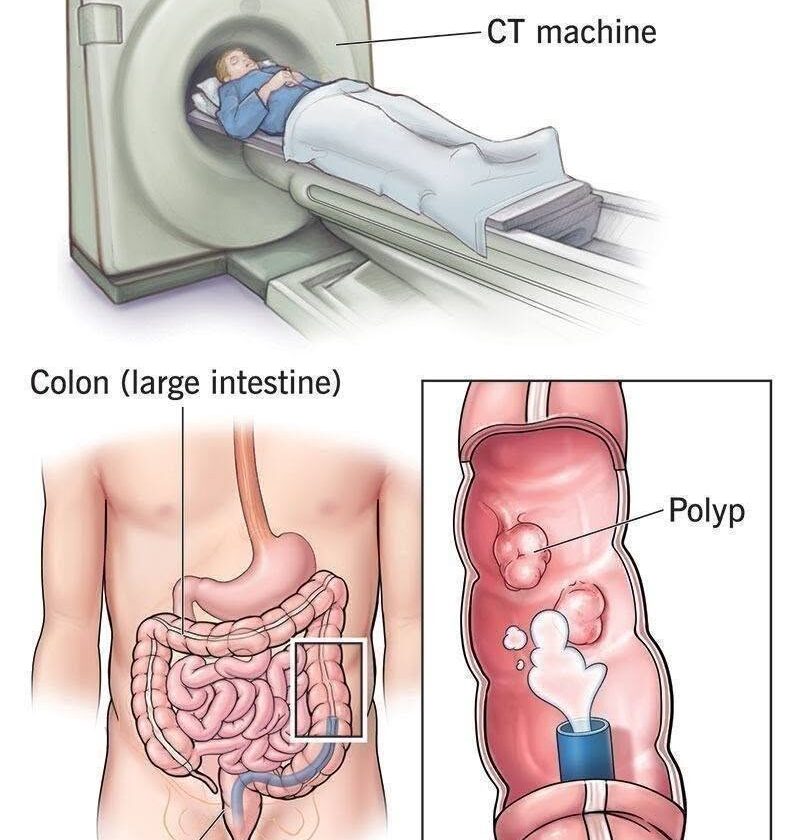
“New Method: Colonoscopy Will No Longer Be an Invasive Examination” — Is It True?This headline is misleading. At present, a standard colonoscopy is still an invasive procedure because it involves inserting a flexible camera through the rectum to examine the colon.
However, there are newer and less invasive screening options for some people.
Alternatives to a standard colonoscopy
- Stool-based tests (such as fecal immunochemical tests (FIT) and stool DNA tests) can screen for signs of colorectal cancer. If the result is abnormal, a follow-up colonoscopy is usually needed.
- CT colonography (“virtual colonoscopy”) uses CT scans to create images of the colon. It is less invasive than a standard colonoscopy but still requires bowel preparation, and an abnormal result typically needs confirmation with a conventional colonoscopy.
- Colon capsule endoscopy involves swallowing a small camera capsule that takes pictures as it passes through the digestive tract. It may be an option for some patients, but it is not a complete replacement for colonoscopy and is not appropriate in every situation.
Why is colonoscopy still important?
A conventional colonoscopy remains the gold standard because it allows the doctor to:
- Examine the entire colon directly.
- Remove polyps during the same procedure.
- Take tissue samples (biopsies) if needed.
These capabilities are not available with most non-invasive screening tests.
Bottom line
Research continues to improve colorectal cancer screening, and less invasive options are becoming more widely available. However, no new method has completely replaced colonoscopy for everyone. The best screening test depends on your age, personal risk factors, family history, and previous screening results. Discuss the options with your healthcare professional to choose the most appropriate test.