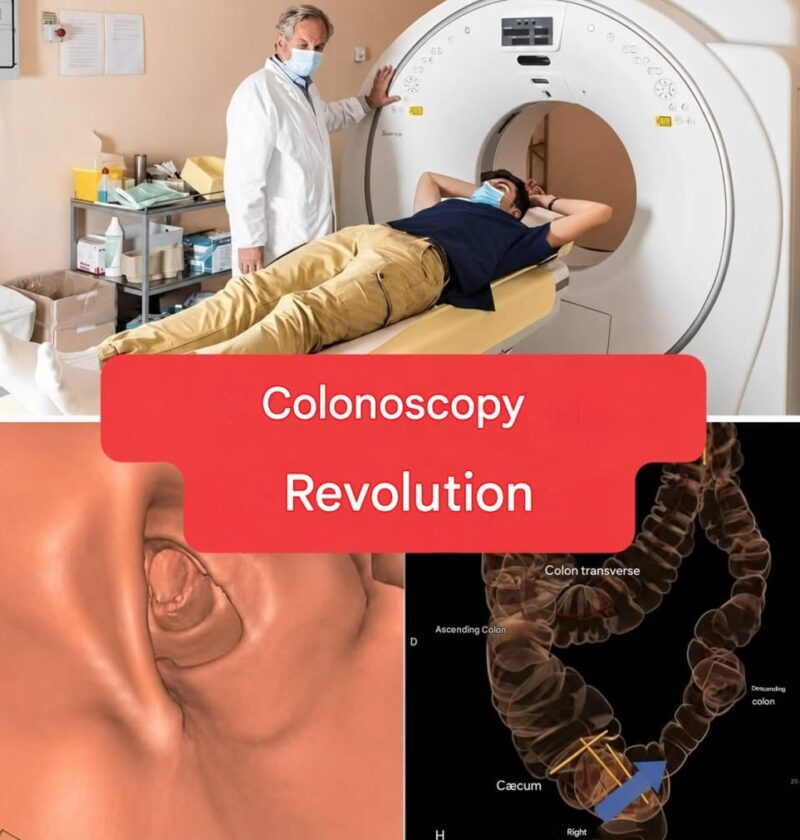
“New method: colonoscopy will no longer be invasive” — is that true?
There is a real, promising alternative, but the headline goes too far. Researchers are developing colon capsule endoscopy, in which you swallow a capsule containing tiny cameras. It travels through the digestive tract and captures images of the colon without inserting a conventional endoscope. The capsule is eventually passed in the stool.
C
Cancer.gov
+1
A promising 2026 development
A multicenter study published in July 2026 tested a newer CC100 colon capsule. Among 136 participants, the capsule achieved complete visualization of the colon in about 91%, while conventional colonoscopy was completed in all participants. For polyps ≥6 mm, sensitivity was about 87% and specificity about 99%.
P
PubMed
That’s encouraging—but it doesn’t mean colonoscopy is obsolete.
The major difference
A capsule can see the colon, but a conventional colonoscopy can also:
Remove polyps during the same procedure.
Take biopsies.
Treat certain bleeding lesions.
Directly investigate suspicious abnormalities.
If a capsule detects a significant polyp, the patient may still need a conventional colonoscopy to remove it. Current guidance has therefore treated capsule examination as an alternative in selected situations, rather than a universal replacement.
P
PubMed
+1
And importantly, bowel preparation is still required before capsule colonoscopy.
C
Cancer.gov
Bottom line: The technology is real and improving rapidly, but “colonoscopy will no longer be invasive” is premature. Capsule colonoscopy may eventually reduce the need for conventional procedures in some patients, but traditional colonoscopy remains important—particularly when a biopsy or polyp removal is needed.
C
P
Sources