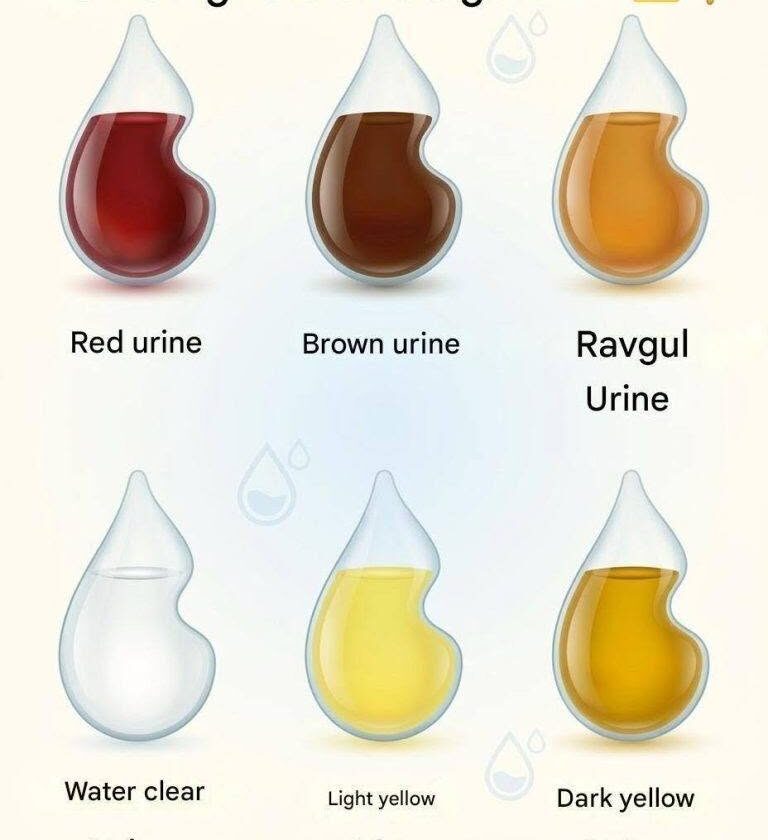
What does the color of your urine say about your health?
Urine color can provide clues, especially about hydration, but it cannot diagnose a disease on its own.
Pale yellow: Usually a good sign that you’re adequately hydrated.
N
NIDDK
Dark yellow: Often means your urine is concentrated and you may need more fluids.
Clear/colorless: Usually means you’re very well hydrated; constantly drinking excessive amounts of water isn’t necessary.
Orange: Can occur with dehydration, but certain medicines can also change urine to orange or darker colors.
N
NIDDK
+1
Pink or red: Beets and some medicines can cause this, but it can also mean blood in the urine. Unexplained blood should be checked by a healthcare professional.
N
NIDDK
+1
Brown or cola-colored: May occur with severe dehydration, but can also be associated with blood, liver problems, or certain medications. Persistent brown urine deserves medical evaluation.
N
NIDDK
+1
Cloudy: Sometimes harmless, but cloudy urine accompanied by burning, frequent urination, fever, or back pain can occur with a urinary tract infection.
N
nhs.uk
Green or blue: Uncommon and can result from certain medicines, dyes, or occasionally an infection.
One important warning
Don’t use urine color as a substitute for medical testing. If you see red, pink, or dark-brown urine and can’t clearly explain it by something you’ve eaten or a medication you’re taking, get it checked—even if you have no pain.
N
NIDDK
+1
And if you have fever, chills, severe side/back pain, difficulty urinating, or blood in your urine, seek medical care promptly.
N
nhs.uk
N
N
Sources