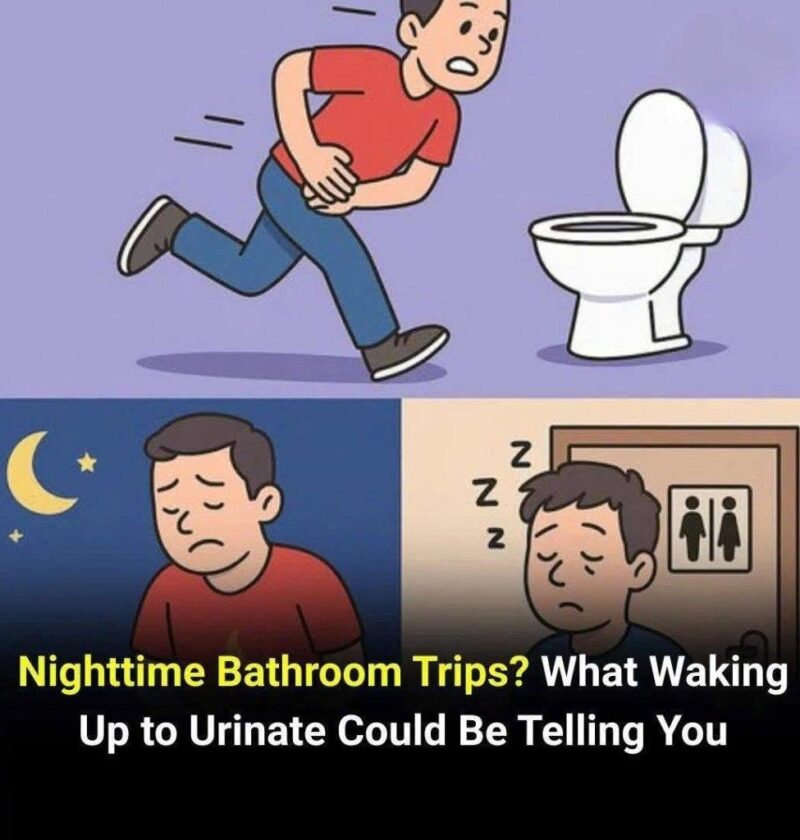
🌙 Nighttime Bathroom Trips Could Be a Sign of These Health Issues
Waking up once a night to urinate can be normal, and nighttime urination often becomes more common with age. But repeatedly getting up several times can sometimes point to an underlying problem. (Guy’s and St Thomas’ NHS Trust)
Possible causes include:
- Diabetes — High blood sugar can increase thirst and urine production, leading to more frequent urination. (Guy’s and St Thomas’ NHS Trust)
- Enlarged prostate — In men, an enlarged prostate can interfere with bladder emptying and cause frequent nighttime urination. (Guy’s and St Thomas’ NHS Trust)
- Urinary tract infection (UTI) — A UTI may cause frequent or urgent urination, often along with burning, cloudy urine, or an unusual smell. (Guy’s and St Thomas’ NHS Trust)
- Overactive bladder — Sudden urges to urinate and frequent trips to the bathroom can occur both day and night. (Oxford Health NHS Foundation Trust)
- Heart or circulation problems — Fluid that collects in the legs during the day can return to the bloodstream when you lie down, increasing urine production at night. (Guy’s and St Thomas’ NHS Trust)
- Kidney problems — Kidney disease and other urinary-tract conditions can sometimes contribute to nighttime urination. (NIDDK)
- Sleep disorders — Sometimes you wake up because of insomnia or another sleep problem and then urinate simply because you’re already awake. (Guy’s and St Thomas’ NHS Trust)
- Evening habits or medications — Drinking lots of fluids close to bedtime, caffeine, alcohol, and some medicines—including diuretics—can increase nighttime urination. (Guy’s and St Thomas’ NHS Trust)
🩺 When should you get checked?
If nighttime bathroom trips are new, becoming more frequent, or repeatedly disturbing your sleep, talk with a healthcare professional. A urine test, medication review, and sometimes a bladder diary can help identify the cause. (Oxford Health NHS Foundation Trust)
Seek prompt medical care if frequent urination is accompanied by blood in the urine, fever, painful urination, significant back/side pain, or inability to urinate. (nhs.uk)
Don’t severely restrict fluids just to avoid nighttime trips. Staying adequately hydrated is important; instead, discuss your evening fluid intake and medications with a healthcare professional. (Guy’s and St Thomas’ NHS Trust)