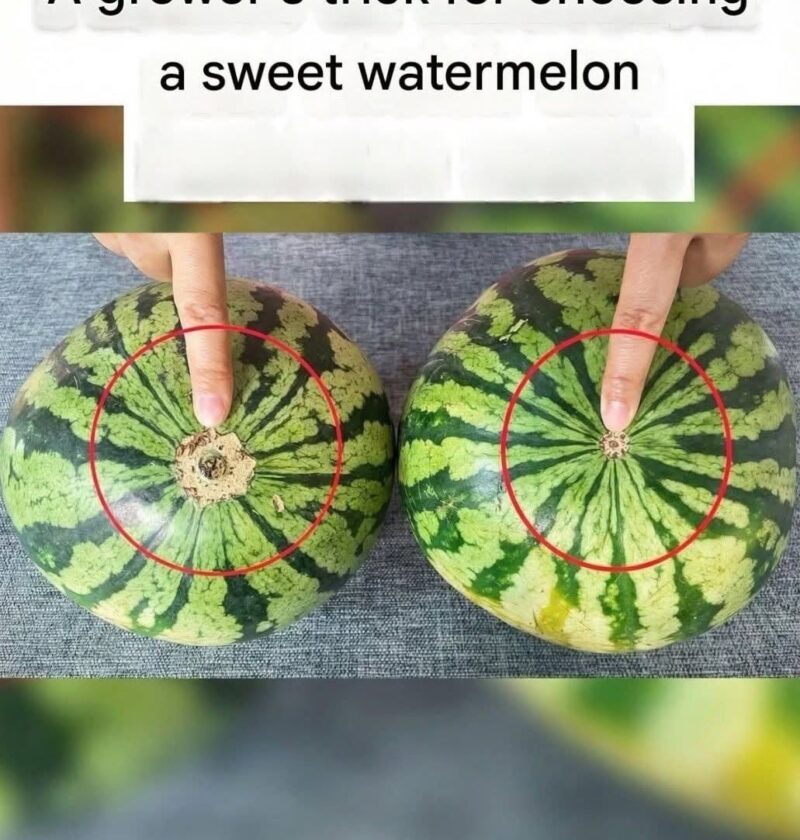
Absolutely—there are a few visual clues that can make choosing a sweet, ripe watermelon much easier. 🍉
🍉 Look for these 6 signs
Large creamy-yellow field spot
Look for the patch where the watermelon rested on the ground. A deep yellow/creamy spot is generally a better sign of ripeness than a white or very pale one.
Brown, web-like markings
A little brown webbing or “sugar spotting” on the skin can indicate areas where the flower was pollinated well. It’s a useful clue, but not a guarantee of sweetness.
Dull rather than shiny skin
A ripe watermelon often has a somewhat dull, matte appearance. Very shiny skin can indicate it isn’t fully mature.
Heavy for its size
Pick up two similarly sized melons. Choose the one that feels heavier, which generally indicates good water content.
Uniform shape
Look for a symmetrical, well-developed melon without major dents or soft spots.
Drying stem (when present)
A dry, brownish stem can be a helpful maturity clue. But commercially harvested watermelons may have stems that don’t reliably indicate ripeness.
👂 What about the “hollow sound”?
Tapping and listening for a deep, resonant sound is a popular traditional trick, but it’s less reliable than the field spot and overall appearance.
Best quick combination:
👉 Big creamy-yellow field spot + heavy for its size + symmetrical shape + no soft/damaged areas.
And one important caveat: none of these guarantees sweetness. Variety, growing conditions, and when the melon was harvested matter too.