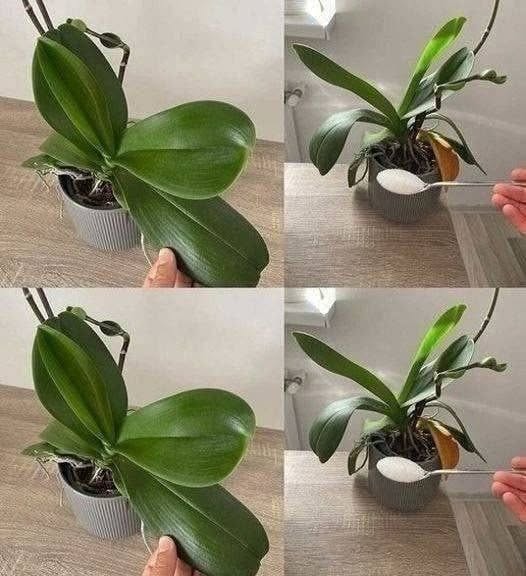
Orchids: Is One Tablespoon of Homemade Fertilizer Enough to Keep Them Blooming?
You may see claims that “one tablespoon of a special ingredient will make orchids bloom continuously,” but orchids do not have a magic fertilizer that guarantees nonstop flowering. Healthy, repeat blooms come from the right balance of light, watering, nutrients, temperature, and care.
A Simple Feeding Approach for Orchids
A commonly recommended method is using a balanced orchid fertilizer (such as one formulated for orchids) rather than kitchen ingredients.
How to use:
- Follow the fertilizer label instructions carefully.
- Feed during active growth periods.
- Avoid over-fertilizing, which can burn roots and reduce flowering.
Natural Supplements Some Growers Use (With Caution)
1. Diluted Rice Water
- Contains small amounts of nutrients from rice.
- Use only occasionally and avoid letting it sit and ferment, as it may attract pests.
2. Banana Peel Water
- Often promoted as a potassium source.
- Evidence for strong orchid benefits is limited, and homemade mixtures can encourage mold or bacteria if not prepared properly.
3. Compost or Organic Orchid Mixes
- Can support long-term plant health when properly balanced.
The Real Secrets to More Orchid Flowers
🌸 Give enough light:
Most orchids prefer bright, indirect light. Too little light is a common reason orchids fail to rebloom.
🌸 Water correctly:
Allow the potting medium to partly dry between waterings. Orchids dislike constantly wet roots.
🌸 Use proper drainage:
Orchid roots need air circulation. Bark-based orchid mixes often work better than regular soil.
🌸 Provide a temperature difference