☠️ “The World’s Deadliest Food” — What’s the Truth?
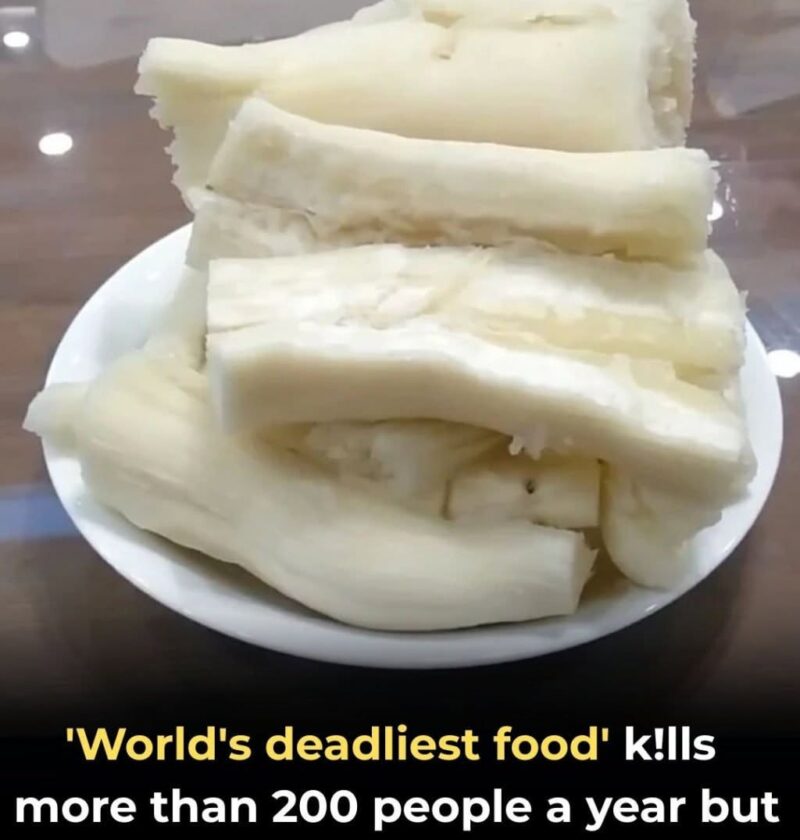
The food behind this viral headline is cassava (also called yuca or manioc). But calling it the “world’s deadliest food” is sensationalized. Cassava is an important staple for hundreds of millions of people and can be perfectly safe when properly processed. (Iris)
🌱 Why can cassava be dangerous?
Cassava contains natural compounds called cyanogenic glycosides. When certain varieties are inadequately processed, these compounds can release hydrogen cyanide, which is highly toxic. (World Health Organization)
Severe cyanide poisoning can cause:
- Headache and dizziness
- Nausea, vomiting, and diarrhea
- Abdominal pain
- Weakness and confusion
- Difficulty breathing
- Convulsions
- Loss of consciousness and, in severe cases, death. (World Health Organization)
🍠 Does that mean you should stop eating cassava?
No. The important issue is proper preparation.
Cassava varieties differ in their cyanogenic content, and traditional processing methods—including appropriate peeling, soaking/fermentation, drying, and cooking—are used to reduce cyanide to safer levels. Improperly processed cassava has caused documented outbreaks of poisoning. For example, the CDC reported an outbreak in Uganda involving 98 cases and two deaths after consumption of inadequately detoxified cassava flour. (CDC)
⚠️ The “200 deaths every year” figure
That number appears frequently in viral articles, but there isn’t strong current global surveillance supporting a precise annual death count of 200. WHO has specifically noted that reliable incidence data for acute cassava poisoning are difficult to obtain and that cases are likely underreported. (Iris)
Bottom line: Cassava isn’t inherently poisonous. It’s a nutritious and important food, but some cassava can contain enough cyanogenic compounds to cause serious poisoning if inadequately processed. Never eat raw or improperly prepared cassava, particularly bitter varieties.