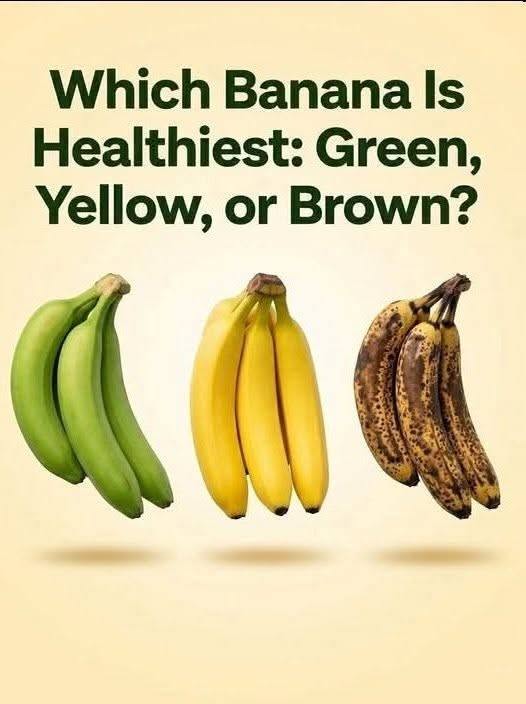
The difference between green, yellow, and brown bananas is mainly about ripeness, which changes their taste, texture, and how your body digests their carbohydrates.
🟢 Green bananas (unripe)
- Taste: Less sweet, slightly starchy
- Texture: Firmer and sometimes a little dry
- Nutrition: Higher in resistant starch, a type of carbohydrate that acts somewhat like fiber and may support gut health.
- Best for: Cooking, adding to savory dishes, or people who prefer a lower-sugar option.
🟡 Yellow bananas (ripe)
- Taste: Sweeter and softer
- Texture: Creamy and easy to digest
- Nutrition: Some resistant starch has converted into natural sugars, making them easier to digest.
- Best for: Snacking, smoothies, oatmeal, and general use.
🟤 Brown-spotted or brown bananas (very ripe)
- Taste: Very sweet
- Texture: Soft and sometimes mushy
- Nutrition: Higher levels of easily available sugars; antioxidants may increase as the banana ripens.
- Best for: Baking (banana bread, muffins), smoothies, or recipes where extra sweetness is useful.
Which one is “healthiest”?
It depends on your goal:
- For more fiber-like resistant starch: choose greener bananas.
- For easy digestion and a quick energy source: choose yellow bananas.
- For baking and natural sweetness: choose ripe brown-spotted bananas.
People with diabetes or blood sugar concerns may want to pay attention to portion size and how ripe the banana is, since riper bananas generally raise blood sugar more quickly. Pairing a banana with protein or healthy fats (such as nuts or yogurt) can slow digestion.