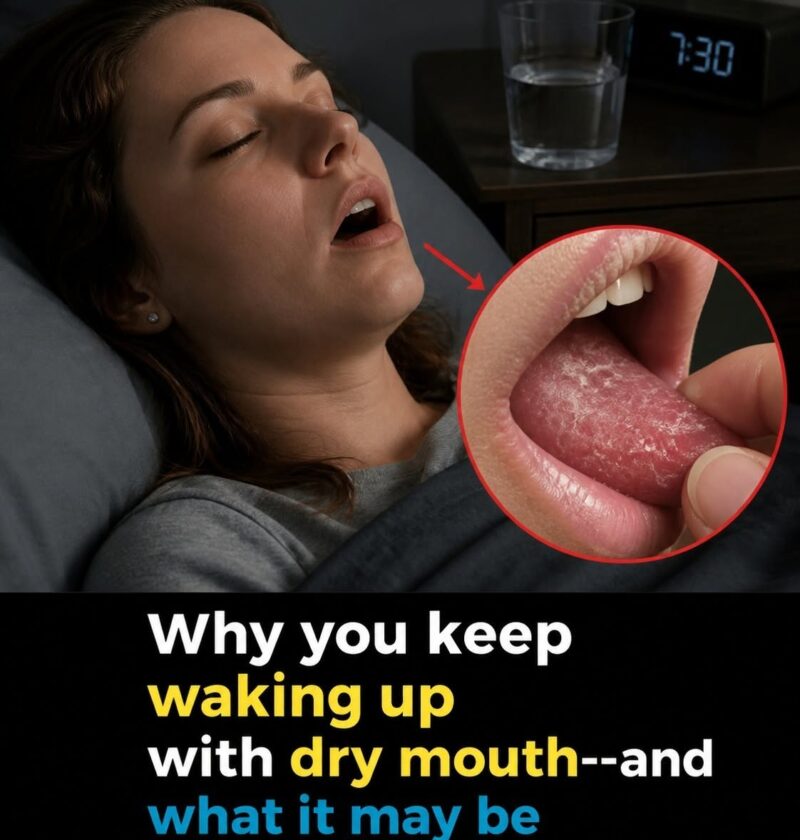
Waking Up With Dry Mouth? Here’s What Your Body Might Be Telling You
Occasional morning dry mouth is common, but persistent dryness can have several causes and isn’t necessarily a sign of a serious illness.
M
Mayo Clinic
You may be breathing through your mouth at night. Nasal congestion, allergies, snoring, or sleeping with your mouth open can dry out the mouth.
M
Mayo Clinic
Your medication could be contributing. Many medicines—including some for high blood pressure, depression, anxiety, allergies, and pain—can reduce saliva production.
M
Mayo Clinic
Dehydration can play a role. Being thirsty or not getting enough fluids can temporarily cause dry mouth.
M
Mayo Clinic
High blood sugar can cause excessive thirst and dry mouth. If you also urinate frequently, feel unusually thirsty, or have unexplained fatigue or weight changes, ask about blood-glucose testing.
M
Mayo Clinic
Sleep apnea is worth considering. Waking with a dry mouth is a recognized symptom, particularly when accompanied by loud snoring, witnessed breathing pauses, gasping/choking, morning headaches, or significant daytime sleepiness.
M
Mayo Clinic
+1
Persistent dry mouth can affect your teeth. Saliva protects against tooth decay and gum disease, so ongoing dryness shouldn’t be ignored.
M
Mayo Clinic
What you can try tonight
Keep water nearby, use a humidifier if the air is dry, and consider sugar-free gum or lozenges during the day to stimulate saliva. Avoid excessive alcohol and tobacco, which can worsen dryness.
M
Mayo Clinic
If your dry mouth is persistent, painful, or interfering with eating or swallowing—or if you have loud snoring and daytime sleepiness—talk with a doctor or dentist. Don’t stop a prescription medicine on your own; ask whether it could be contributing.
M
Mayo Clinic
+1
M
Sources