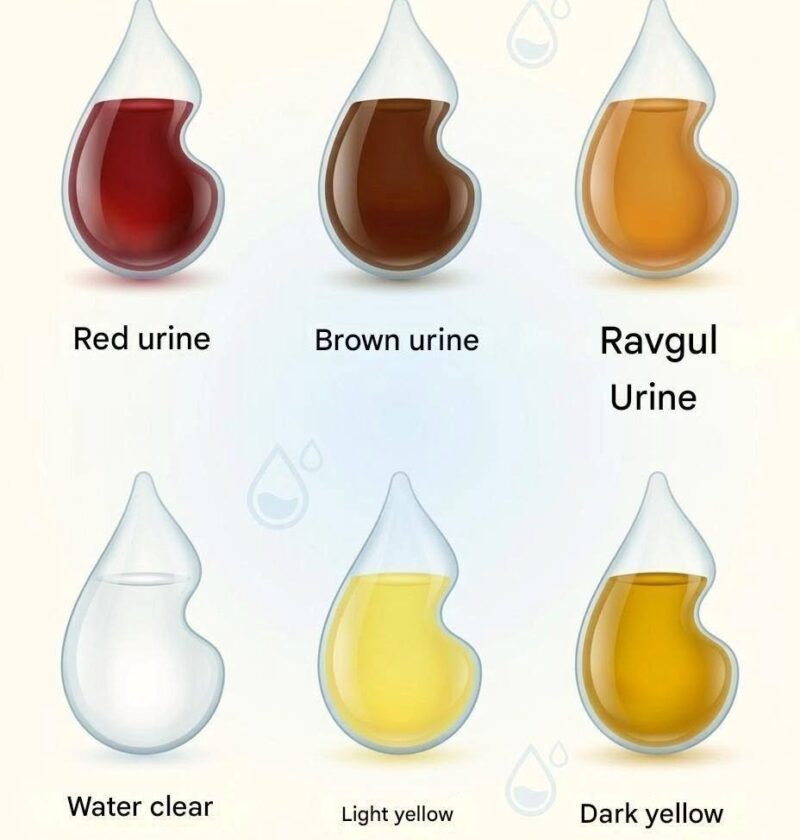
Clear or Very Pale Yellow
Usually indicates that you are well hydrated. If your urine is consistently completely clear, it may mean you are drinking more water than your body needs.
Light Yellow
This is generally considered a normal, healthy urine color and often reflects good hydration.
Dark Yellow or Amber
Often a sign that you may need more fluids. Dehydration causes urine to become more concentrated and darker.
Orange Urine
Can happen from dehydration or certain foods and medications. In some cases, orange urine may be related to liver or bile problems, especially if you notice yellowing of the skin or eyes.
Pink or Red Urine
May be caused by foods such as beets or certain medications, but it can also indicate blood in the urine. Blood in urine should be checked by a healthcare professional, especially if it is unexplained.
Brown or Tea-Colored Urine
Can occur with severe dehydration, certain medications, or muscle breakdown. It may also be associated with liver or kidney problems and should be evaluated if it persists.
Blue or Green Urine
Rare, but can result from certain dyes, medications, or medical conditions. Persistent unusual colors should be discussed with a doctor.
Cloudy or Milky Urine
May be linked to dehydration, urinary tract infections (UTIs), kidney stones, or other conditions—particularly if there is pain, burning, fever, or a strong odor.
When to Seek Medical Advice
Contact a healthcare professional if you notice:
- Blood in your urine
- Persistent dark, brown, or unusual urine color
- Pain or burning during urination
- Fever, back/flank pain, or difficulty urinating
- A sudden change that does not improve with normal hydration
The best indicator of healthy urine is usually a pale straw-yellow color, but many factors—including foods, medications, supplements, and hydration—can change urine color temporarily.