What Does the Color of Your Urine Say About Your Health?
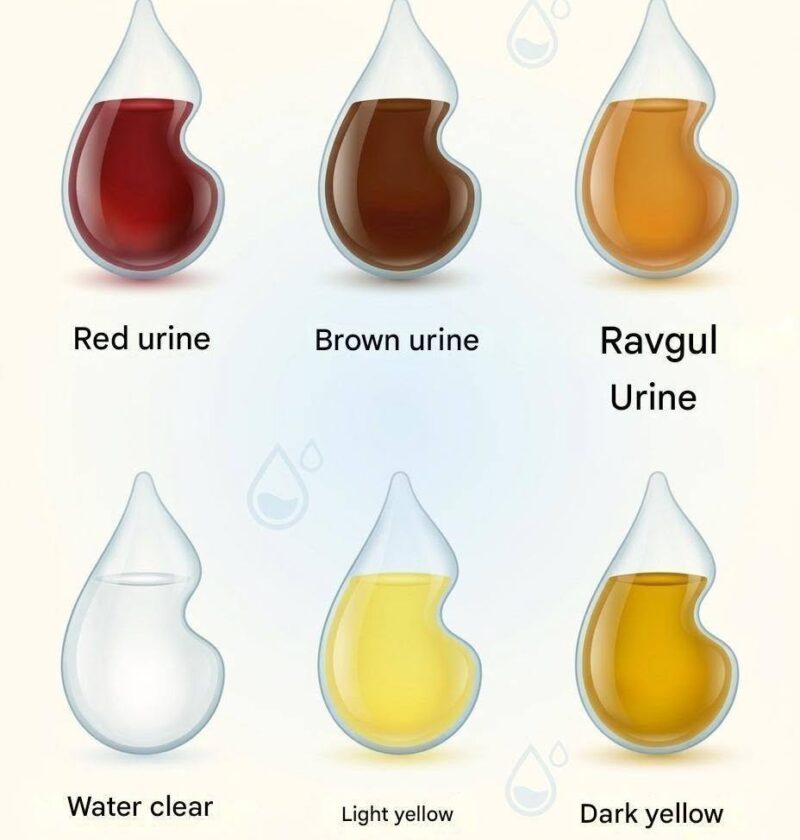
Urine color can give you useful clues, but it can’t diagnose a disease on its own. Normally, urine ranges from clear to pale yellow, with darker yellow often indicating more concentrated urine and possibly dehydration.
M
Mayo Clinic
+1
Clear: Usually means you’re well hydrated, although constantly drinking excessive amounts of water isn’t necessary.
Pale yellow: Generally a sign of adequate hydration.
Dark yellow/amber: Often means your urine is concentrated and you may need more fluids.
Orange: Can result from dehydration, vitamins, or medications. Persistent orange urine—especially with yellow skin/eyes or pale stools—can indicate a liver or bile-duct problem.
M
Mayo Clinic
Pink or red: Sometimes caused by foods such as beets, but it can also mean blood in the urine. Unexplained red or pink urine should be checked by a healthcare professional.
M
Mayo Clinic
+1
Brown or cola-colored: Can occur with severe dehydration, certain medications, liver or kidney problems, or muscle injury.
M
Mayo Clinic
Green or blue: Food dyes and certain medicines can cause these colors; occasionally, a urinary infection can produce green urine.
M
Mayo Clinic
Cloudy or milky: Can occur with a urinary tract infection or kidney stones, among other causes.
M
Mayo Clinic
When should you get checked?
Seek medical advice for visible blood in your urine, persistent unusual discoloration, or dark/brown urine without an obvious explanation. Painful urination, fever, side/back pain, or difficulty urinating are additional reasons to seek care.
M
Mayo Clinic
+1
Remember, urine color alone isn’t a health test. A urinalysis can detect things you can’t see, including blood, protein, glucose, ketones, and signs of infection.
M
Mayo Clinic
M
Sources