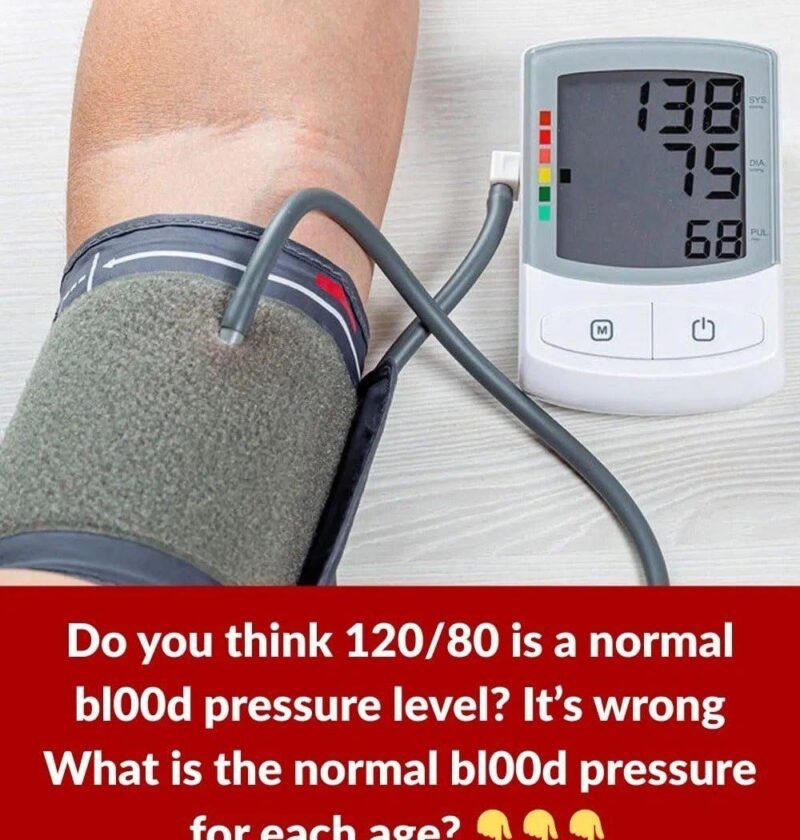
There isn’t a different “normal blood pressure” for every age in modern medicine. Instead, most guidelines use a single healthy range for adults, while only infants and children have clearly age-based ranges.
Here’s a clear, evidence-based breakdown:
🩺 Normal Blood Pressure by Age
👶 Children (approximate ranges vary by height/age)
Blood pressure increases as children grow:
- Infants: ~70–100 / 50–65 mmHg
- Toddlers (1–3 yrs): ~90–105 / 55–70 mmHg
- School-age (6–12 yrs): ~95–120 / 60–80 mmHg
- Teenagers: closer to adult range
Pediatric doctors use percentiles, not fixed numbers.
🧑 Adults (18–64 years)
Standard healthy range:
- Normal: less than 120/80 mmHg
- Elevated: 120–129 / less than 80
- High blood pressure (Hypertension Stage 1): 130–139 / 80–89
- Stage 2: 140/90 or higher
👵 Older adults (65+ years)
Modern guidelines still use the same categories:
- Normal goal: usually below 130/80
- Some older adults may have slightly higher targets depending on health conditions
However, doctors may individualize targets to avoid dizziness or falls.
⚠️ Important clarification
Older beliefs said “blood pressure naturally rises with age,” but current research shows:
- Lower blood pressure (within safe range) is generally better for heart and brain health
- Treatment decisions depend on overall health, not just age
🚨 When to worry
Seek medical advice if:
- Consistently above 130/80
- Above 180/120 (urgent)
- Symptoms like chest pain, headache, dizziness, or shortness of breath occur
🟢 Key takeaway
- Normal adult BP: <120/80 mmHg
- There is no separate “normal” range for each adult age group
- Targets may be adjusted individually based on health
If you want, tell me your age and recent readings, and I can help you interpret whether they’re normal or concerning.