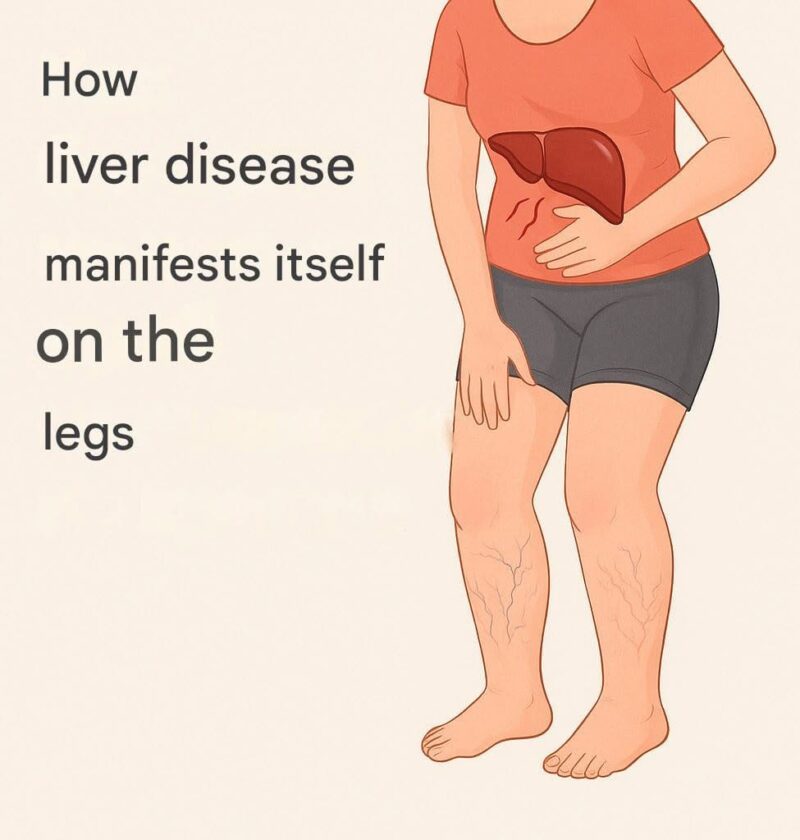
The headline “Your legs are screaming ‘HELP!’: 5 warning signs from your liver” is written to sound alarming, but there is a real connection between advanced liver disease and certain leg symptoms. However, most leg problems are not caused by the liver.
Possible liver-related signs that can affect the legs or lower body include:
- Swelling in the legs and ankles (oedema)
- Advanced liver disease can lead to low albumin levels and fluid buildup, causing swelling, especially in the lower legs.
- Muscle loss or weakness
- Chronic liver disease can cause loss of muscle mass and reduced strength, sometimes noticeable in the legs.
- Itching (pruritus)
- Liver conditions that affect bile flow can cause widespread itching, which may be felt in the legs as well as elsewhere.
- Easy bruising or bleeding
- A damaged liver may produce fewer clotting proteins, which can make bruises appear more easily, including on the legs.
- Changes linked to circulation or fluid buildup
- In serious liver disease, fluid can accumulate in the abdomen and legs, and veins can become more prominent due to increased pressure in the liver’s blood vessels.
Other common causes of leg symptoms
Leg swelling, cramps, pain, tingling, or fatigue are much more often caused by things such as:
- Varicose veins
- Medication side effects
- Dehydration or electrolyte changes
- Nerve problems (such as diabetes-related neuropathy)
- Muscle strain
- Heart or kidney conditions
When to seek medical advice
Contact a healthcare professional if you have:
- New or rapidly worsening leg swelling
- Yellowing of the skin or eyes
- Dark urine or unusually pale stools
- Persistent abdominal swelling
- Confusion, severe drowsiness, or vomiting blood (urgent symptoms)
Leg symptoms alone usually do not diagnose liver disease. A doctor would typically look at the whole picture and may use blood tests (such as liver function tests), imaging, and other assessments if liver problems are suspected.