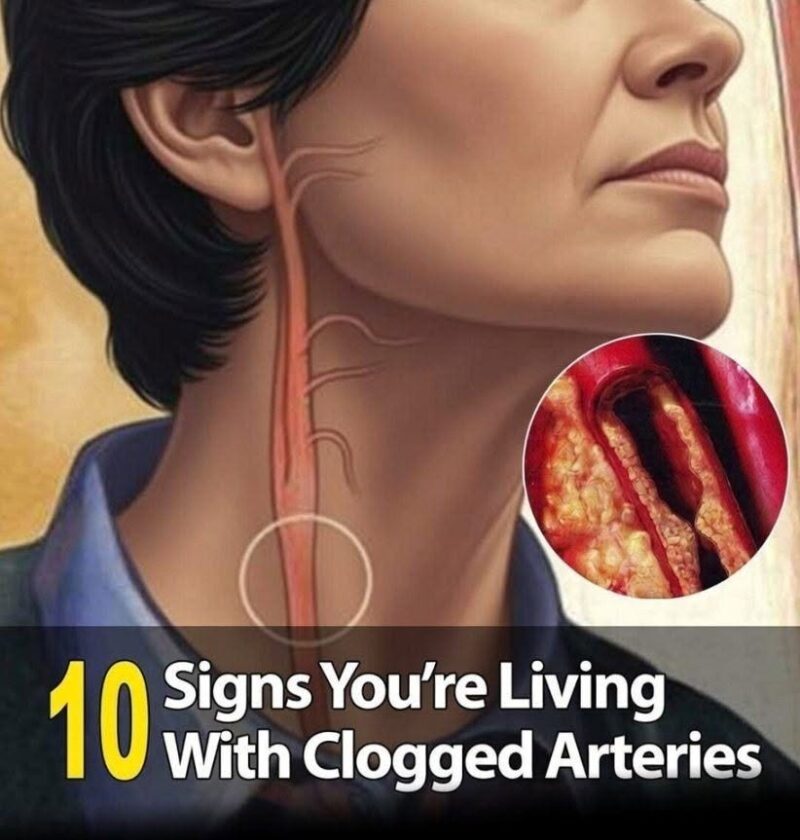
10 Indicators of Blocked Arteries You Shouldn’t Ignore
“Blocked arteries” can affect different parts of the body, and many people have no symptoms until disease is advanced. Symptoms depend on which arteries are affected.
N
NHLBI, NIH
+1
Here are 10 warning signs worth discussing with a healthcare professional:
Chest pressure, tightness, or pain — especially with exertion, which can indicate reduced blood flow to the heart.
Shortness of breath — particularly during physical activity.
Pain or cramping in the legs when walking that improves after resting. This is a classic symptom of peripheral artery disease (PAD).
N
NHLBI, NIH
Leg or foot numbness or weakness — particularly if it occurs repeatedly with activity.
N
NHLBI, NIH
One foot feeling noticeably colder than the other.
N
NHLBI, NIH
Pale, bluish, or otherwise unusual skin color on a foot or leg.
N
NHLBI, NIH
Slow-growing toenails or reduced hair growth on the legs and feet.
N
NHLBI, NIH
Sores on the feet or legs that heal slowly or don’t heal.
N
NHLBI, NIH
Pain in the feet or legs while resting, particularly at night, which can indicate severe circulation problems.
N
NHLBI, NIH
Sudden neurological symptoms—such as facial drooping, one-sided weakness or numbness, difficulty speaking, vision problems, or sudden loss of balance—which can indicate a stroke caused by interrupted blood flow to the brain.
A
American Heart Association
When it’s an emergency
Sudden chest pressure/pain, severe breathing difficulty, or stroke symptoms require emergency medical attention. Likewise, a suddenly cold, pale/blue, numb, or immobile foot can indicate an acute loss of blood flow and requires immediate care.
N
NHLBI, NIH
Importantly, these symptoms don’t prove that an artery is blocked. Arthritis, nerve problems, muscle conditions, and other illnesses can cause similar symptoms. Doctors can evaluate circulation using an examination and tests such as an ankle-brachial index (ABI) or vascular imaging when appropriate.
N
NHLBI, NIH
+1
N
A
Sources