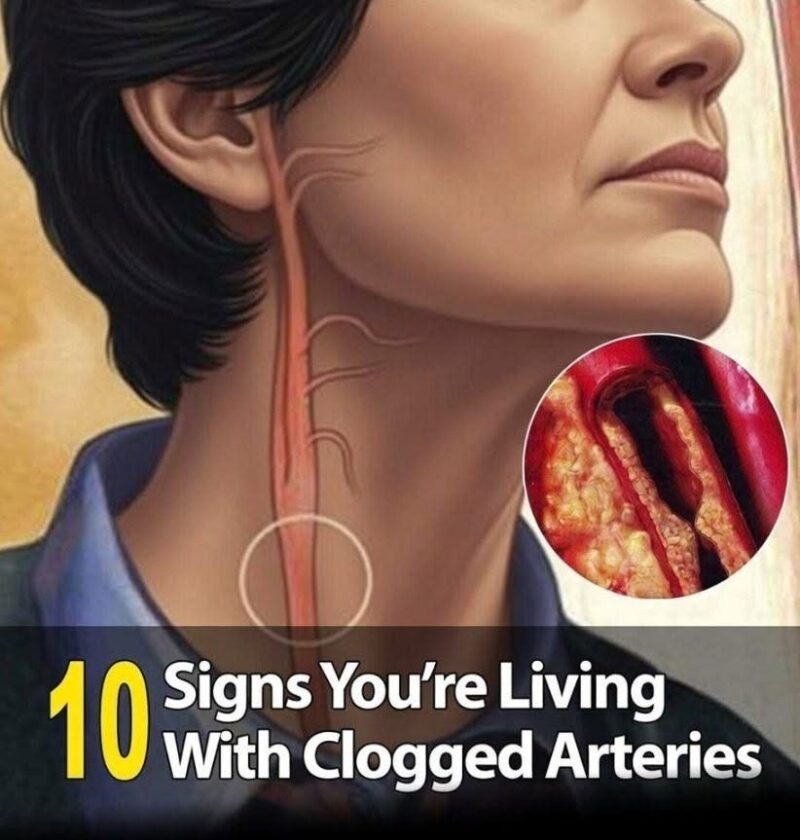
Blocked arteries (often due to atherosclerosis, the buildup of plaque inside blood vessels) can sometimes develop for years without obvious symptoms. Warning signs depend on which arteries are affected, but these are symptoms that should not be ignored:
10 possible warning signs of artery problems
- Chest pressure, tightness, or pain
- Especially during activity or stress, and relieved by rest (a possible sign of reduced blood flow to the heart).
- Shortness of breath
- Feeling unusually breathless with normal activities can be linked to heart or circulation problems.
- Pain, heaviness, or cramping in the legs when walking
- May indicate reduced blood flow to the legs (peripheral artery disease).
- Coldness, numbness, or weakness in a limb
- Poor circulation can affect temperature and sensation.
- Slow-healing wounds on the feet or legs
- Reduced blood supply can make injuries heal more slowly.
- Dizziness or fainting
- Can have many causes, but may require evaluation when related to heart or circulation issues.
- Unusual fatigue
- Especially when it occurs with activity or along with chest discomfort or shortness of breath.
- Erectile dysfunction in men
- Sometimes associated with blood vessel problems because smaller arteries may show symptoms earlier.
- Stroke-like symptoms
- Sudden facial drooping, arm weakness, confusion, trouble speaking, or vision changes may indicate a blocked artery to the brain.
- Heart attack warning signs
- Severe chest discomfort, pain spreading to the arm/jaw/back, sweating, nausea, or sudden weakness require urgent medical attention.
Seek emergency help immediately for:
- Chest pain lasting more than a few minutes or returning repeatedly
- Sudden weakness on one side of the body
- Trouble speaking or understanding speech
- Sudden severe shortness of breath
Many people with artery disease have risk factors rather than symptoms, including high blood pressure, high cholesterol, diabetes, smoking, and a family history of heart disease. Regular checkups and managing these risks are key to prevention.