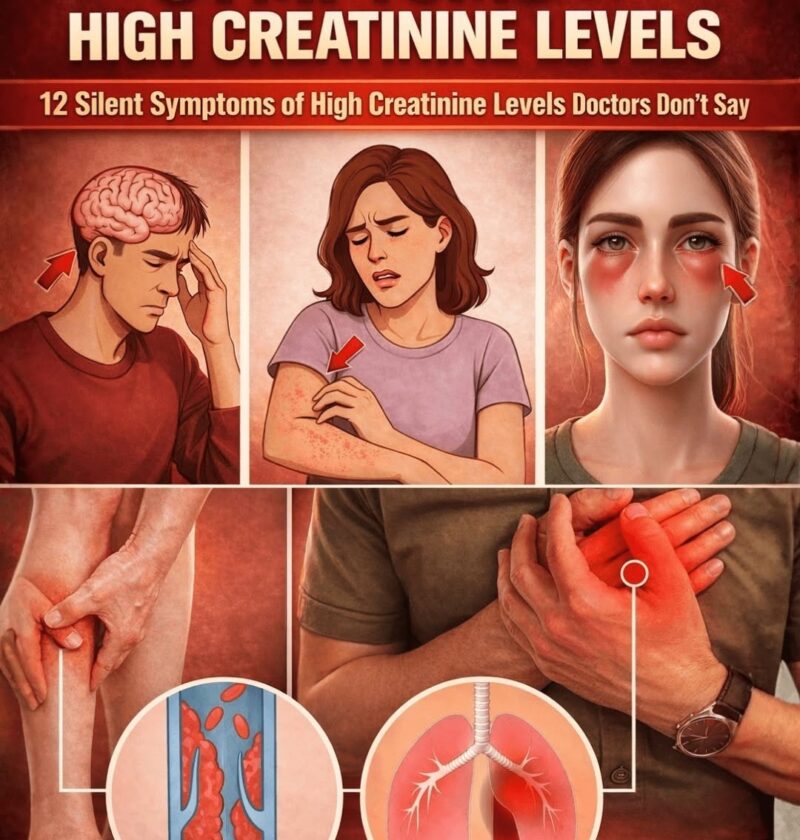
12 “Signs” of High Creatinine — What They Really Mean
The headline is a little misleading: high creatinine itself usually doesn’t cause symptoms. Creatinine is a waste product that the kidneys normally remove from the blood. When kidney filtration decreases, creatinine can rise—but the symptoms people notice are generally caused by the underlying loss of kidney function, not by creatinine itself.
N
NIDDK
+1
Possible signs of worsening kidney function include:
Unusual fatigue or weakness
Difficulty concentrating or “brain fog”
Poor sleep
Muscle cramps, especially at night
Swelling in the feet, ankles, legs, or around the eyes
Persistent itching or very dry skin
Foamy or unusually bubbly urine
Urinating more or less often than usual
Loss of appetite
Nausea or vomiting
Shortness of breath
Changes in taste or an unpleasant taste in the mouth
N
NIDDK
+1
The most important point
Early kidney disease often has no symptoms at all. Waiting for these signs can therefore miss kidney disease in its early stages. Blood and urine testing is much more useful.
N
NIDDK
+1
Doctors generally look at:
Serum creatinine and eGFR — to estimate how well the kidneys are filtering.
Urine albumin-to-creatinine ratio (uACR) — to detect protein leaking into the urine.
N
NIDDK
+1
Also, one elevated creatinine result doesn’t automatically mean chronic kidney disease. Creatinine can be influenced by muscle mass, diet, and other factors, and trends in eGFR are often more informative than a single measurement.
N
NIDDK
+1
If you have diabetes, high blood pressure, heart disease, are over 60, or have a family history of kidney failure, regular kidney testing is particularly important.
N
NIDDK
+1
N
Sources