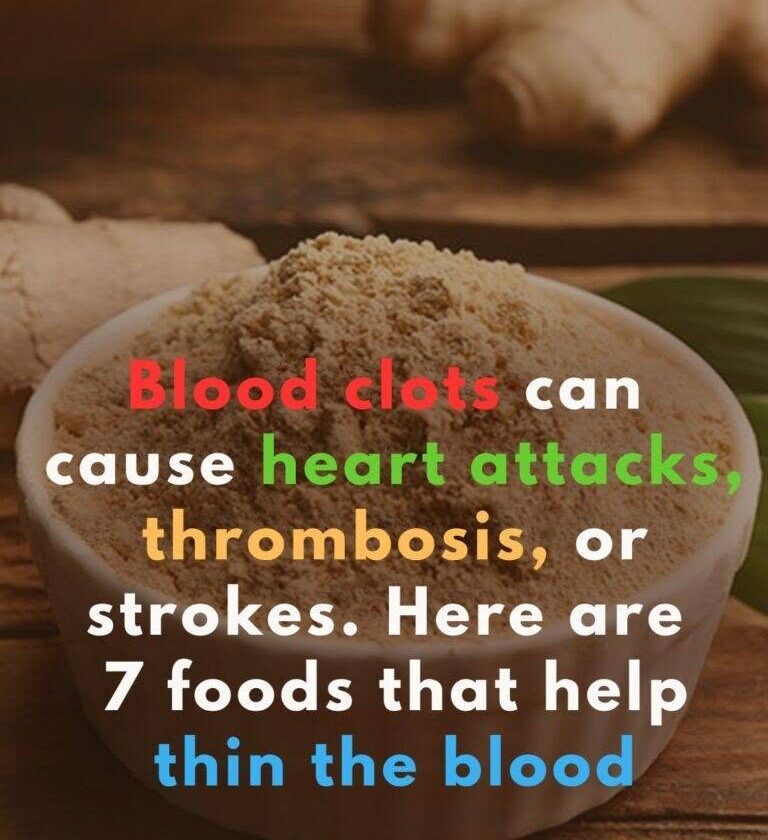
If you’re fact-checking “7 powerful blood-thinning foods,” the headline is misleading. Food does not work like a prescribed anticoagulant, and there isn’t a medically established list of foods that can safely “thin your blood” enough to prevent or treat a clot.
Some foods and dietary components can influence platelet function or the effects of anticoagulant medicines, but the effects are generally much less predictable than medication.
Foods commonly mentioned in these claims
- Garlic
- Ginger
- Turmeric
- Fatty fish/omega-3-rich foods
- Cinnamon
- Cranberries
- Green tea
These can be nutritious additions to a balanced diet, but don’t use them as a substitute for prescribed blood thinners.
⚠️ Especially important if you take warfarin
Suddenly changing how much vitamin-K-rich food you eat—particularly leafy green vegetables—can change how warfarin works and affect your INR. You generally do not need to avoid these healthy foods; the important thing is keeping your intake reasonably consistent. (nhs.uk)
Cranberry products can also interact with warfarin, and NHS guidance advises avoiding cranberry juice/products while taking it. (nhs.uk)
Bottom line: A healthy diet can support cardiovascular health, but there is no food that safely replaces an anticoagulant or treats an existing blood clot. If you’re taking a blood thinner, check with your doctor or pharmacist before making major dietary changes or starting concentrated herbal supplements.