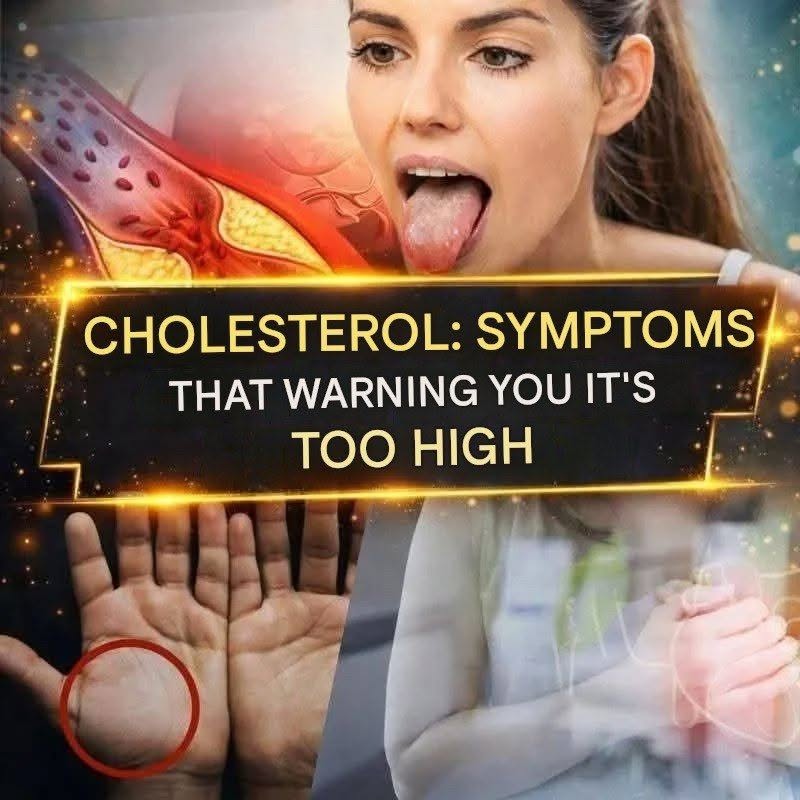
The headline “Cholesterol: 5 symptoms that warn you it’s too high” is misleading.High cholesterol usually causes no symptoms at all. That’s why it’s often called a “silent” condition. The only reliable way to know if your cholesterol is high is through a blood test.
Some signs that may be associated with very high cholesterol or its complications include:
- Yellowish fatty deposits on the skin or around the eyes (xanthomas or xanthelasma), especially in people with inherited high cholesterol.
- A grey-white ring around the cornea (corneal arcus) in younger people, which can sometimes be linked to inherited high cholesterol.
- Chest pain (angina) if high cholesterol has contributed to narrowing of the heart’s arteries.
- Pain in the legs when walking (claudication) due to reduced blood flow from peripheral artery disease.
- Symptoms of a heart attack or stroke, such as severe chest pain, shortness of breath, weakness on one side of the body, or difficulty speaking. These are complications of long-term high cholesterol, not early warning symptoms.
Should you be tested?
You may benefit from a cholesterol check if you:
- Are over 40 (depending on your country’s screening recommendations).
- Have diabetes.
- Have high blood pressure.
- Smoke.
- Have obesity.
- Have a family history of early heart disease or high cholesterol.
The key takeaway is that you can have dangerously high cholesterol and feel completely well, so regular screening is more reliable than looking for symptoms.