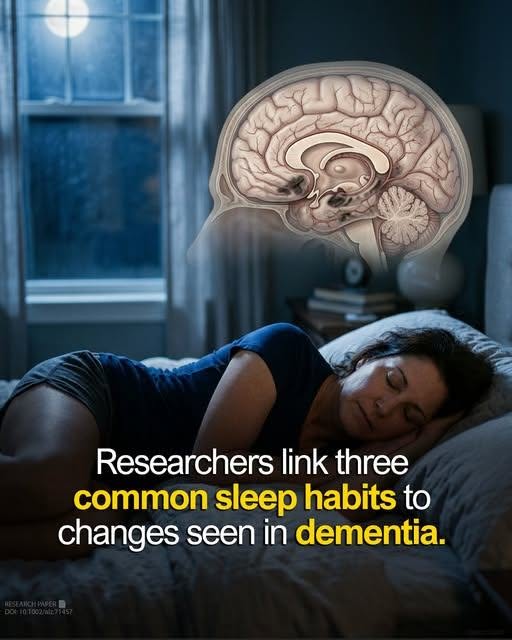
The headline refers to a study suggesting that three common sleep patterns are associated with brain changes linked to aging and dementia risk. The study does not prove that these habits cause dementia; it found an association between sleep behaviors and markers of brain health. (University of Arizona News)
The three sleep habits identified were:
- Sleeping outside the recommended range (about 7–9 hours per night)
- Both too little and too much sleep were associated with signs of faster brain aging. (University of Arizona News)
- Frequent daytime napping
- Regular napping was linked with brain changes associated with aging. Researchers note that frequent naps may sometimes reflect underlying issues such as poor nighttime sleep or health problems, rather than being a direct cause. (University of Arizona News)
- Trouble sleeping (insomnia or poor sleep quality)
- Difficulty getting enough restful sleep was associated with markers of brain aging. (University of Arizona News)
The researchers analyzed brain scans and questionnaire data from more than 23,000 middle-aged and older adults and looked at white matter lesions—small areas of brain damage that can accumulate with age and are associated with increased risk of cognitive decline and dementia. (University of Arizona News)
What this means in practice:
- Aim for a consistent sleep schedule and roughly 7–9 hours of sleep if that fits your needs.
- Treat persistent insomnia, loud snoring, or possible sleep apnea with medical advice.
- Don’t assume an occasional nap is harmful; the concern is more about frequent or prolonged daytime sleepiness. (University of Arizona News)
The main takeaway is that sleep health appears to be one piece of overall brain health, alongside factors like exercise, blood pressure control, social engagement, and managing medical conditions. (pubmed.ncbi.nlm.nih.gov)