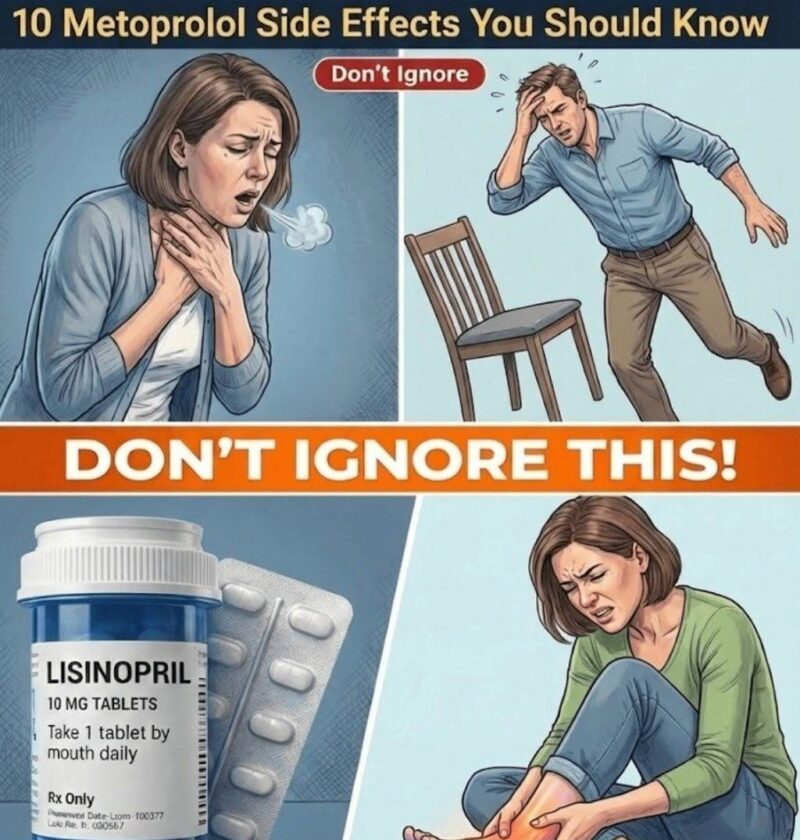
Metoprolol is a beta blocker commonly prescribed to treat high blood pressure, angina (chest pain), heart failure, certain abnormal heart rhythms, and to reduce the risk of future heart problems after a heart attack. Most people tolerate it well, but it can cause side effects.
Here are 10 side effects that may be overlooked:
- Fatigue or low energy
- One of the most common side effects, especially when starting treatment or increasing the dose.
- Slow heart rate (bradycardia)
- Metoprolol slows the heart. If your pulse becomes very slow or you feel faint, contact your healthcare provider.
- Dizziness or lightheadedness
- Especially when standing up quickly, due to lower blood pressure.
- Cold hands and feet
- Reduced blood flow to the extremities can make them feel cold.
- Exercise intolerance
- Because metoprolol limits how fast your heart rate rises, strenuous exercise may feel more difficult.
- Sleep changes
- Some people report vivid dreams, insomnia, or unusual sleep patterns.
- Mood changes
- Depression or low mood has been reported, although the relationship is not always clear.
- Sexual dysfunction
- Some people experience decreased libido or erectile dysfunction.
- Digestive symptoms
- Nausea, diarrhea, constipation, or stomach discomfort can occur.
- Masking signs of low blood sugar
- In people with diabetes, metoprolol can make it harder to notice symptoms such as a rapid heartbeat during hypoglycemia. Sweating may still occur.
Important precautions
- Do not stop metoprolol suddenly. Abrupt discontinuation can increase the risk of chest pain, heart attack, or abnormal heart rhythms. If it needs to be stopped, it is usually tapered under medical supervision.
- Take it exactly as prescribed. If you miss a dose, follow your prescriber’s instructions rather than doubling the next dose.
When to seek medical attention
Contact a healthcare professional promptly if you have:
- Fainting or severe dizziness
- Difficulty breathing or worsening wheezing