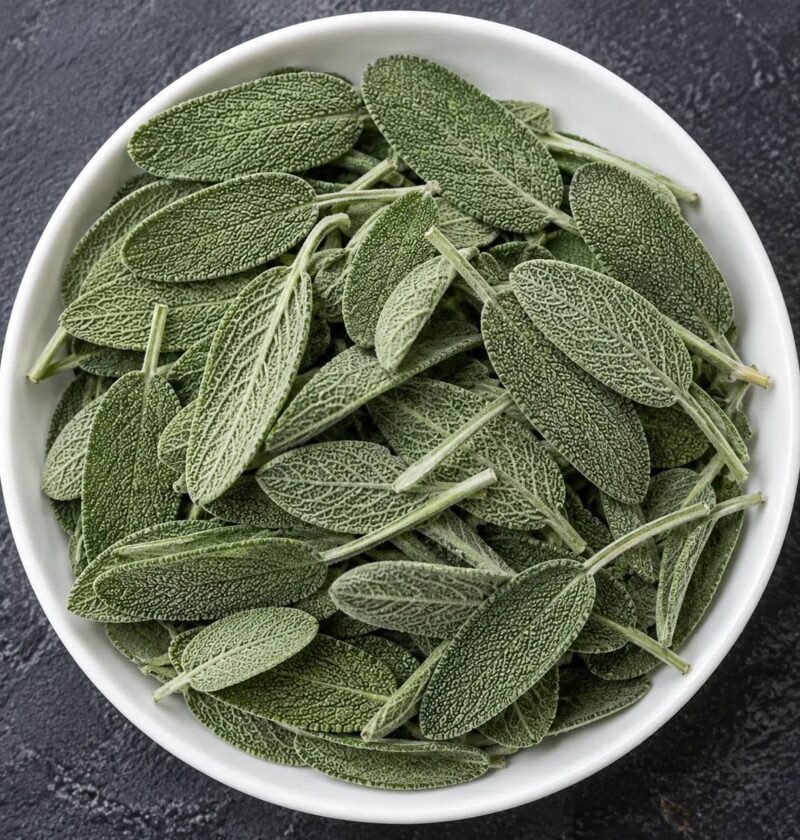
If you mean common sage (Salvia officinalis), the science is interesting, but the word “proven” is too strong. Research suggests several possible benefits, but the evidence is still limited and some claims are based on small studies. (NCCIH)
🌿 Potential benefits of sage
1. May reduce menopausal hot flashes
This is one of the better-supported uses. Several small clinical studies found reductions in hot-flash frequency, and a 2023 systematic review found evidence of benefit, although the researchers said more high-quality studies are needed. (PubMed)
2. May support memory and cognition
Small studies have reported improvements in some memory or cognitive tests in healthy adults. However, the evidence isn’t strong enough to say sage prevents dementia or treats Alzheimer’s disease. (NCCIH)
3. May have effects on cholesterol
Some studies suggest sage could modestly improve cholesterol or other blood lipids, but there isn’t enough evidence to recommend it as a treatment for high cholesterol. (NCCIH)
4. May help some menopausal symptoms
Small randomized trials have reported improvements in symptoms such as night sweats and sleep problems, but these findings need confirmation in larger, better-designed trials. (PubMed)
5. Contains antioxidant compounds
Sage contains plant compounds with antioxidant activity. However, laboratory antioxidant activity doesn’t automatically mean that eating sage prevents disease in humans.
⚠️ Sage isn’t risk-free
Using sage as a normal culinary herb is generally considered safe. Concentrated extracts and large amounts are different. Common sage contains thujone, which can be toxic at high doses or with prolonged use. (NCCIH)
So don’t assume that more sage = more health benefits, and don’t substitute sage supplements for prescribed treatment.
Bottom line: Sage is a nutritious culinary herb with promising research—particularly for menopausal hot flashes—but claims that it “prevents dementia,” “cures diabetes,” or “cleans the arteries” go beyond what the evidence currently supports.