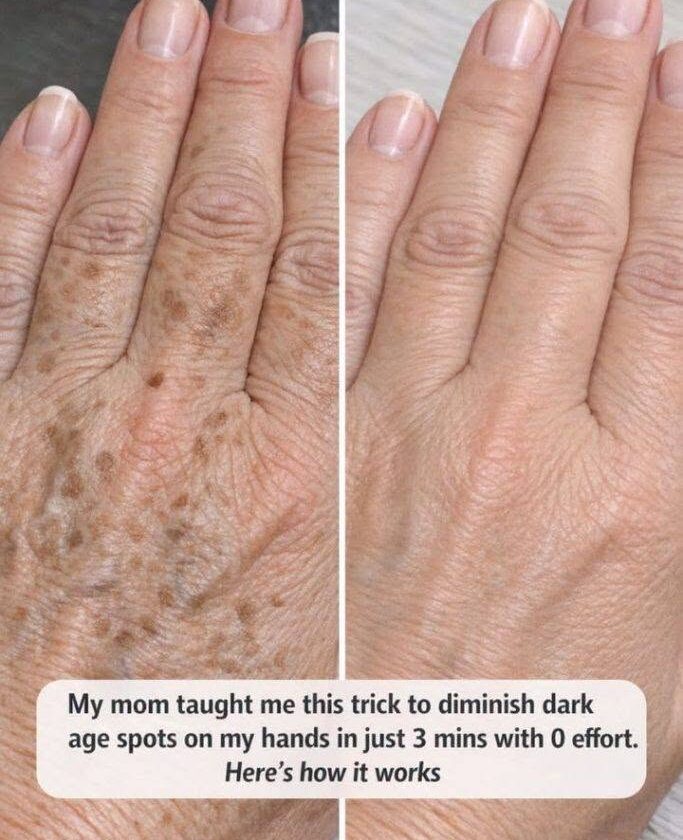
If you’re referring to the viral “3-minute, zero-effort” trick, the important point is that there is no proven home remedy that can erase true age spots in three minutes. Age spots (solar lentigines) develop largely from cumulative sun exposure, and dermatologists recommend sun protection plus evidence-based treatments when fading is desired. (American Academy of Dermatology)
What may be behind the viral trick?
These posts commonly recommend lemon juice or other acidic kitchen ingredients. They may temporarily make skin look brighter by removing surface oils or causing mild exfoliation, but that is not the same as removing the pigment responsible for an age spot.
I would not recommend rubbing undiluted lemon juice on your hands. It can irritate the skin, and citrus exposure followed by sunlight can cause a phototoxic reaction and leave pigmentation worse.
What actually works?
For genuine age spots on the hands, dermatologists may use:
- Prescription retinoids or other lightening treatments
- Chemical peels
- Cryotherapy (freezing)
- Laser/IPL treatments
- Microdermabrasion
These treatments take longer than three minutes, but they have considerably better evidence. (American Academy of Dermatology)
☀️ The most important “ingredient”: sunscreen
Apply a broad-spectrum SPF 30+ sunscreen to the backs of your hands whenever you’re going outdoors. Consistent sun protection helps prevent new age spots and helps existing treatment results last longer. (American Academy of Dermatology)
One important warning: Don’t automatically assume every brown spot is an age spot. Some precancerous lesions and skin cancers can resemble age spots. A new, changing, irregular, bleeding, or rough/scaly dark spot should be examined by a dermatologist before trying to lighten it. (American Academy of Dermatology)
Bottom line: the “3-minute” claim is clickbait. You can make your hands look temporarily brighter very quickly, but genuine age spots cannot reliably be removed in three minutes with a kitchen ingredient.