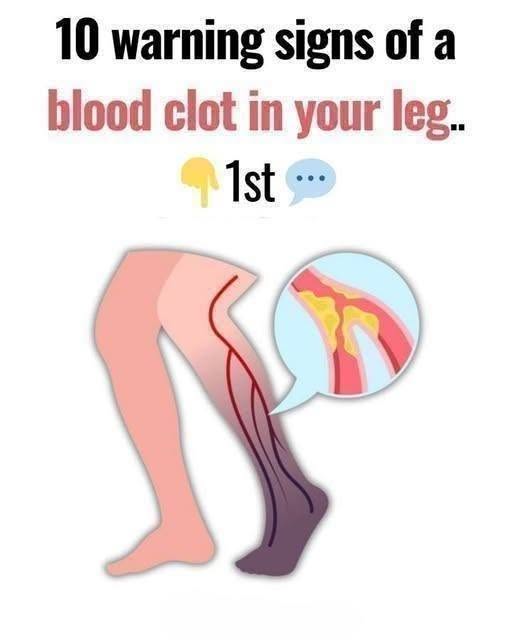
10 Warning Signs of a Blood Clot in the Leg
A blood clot in a deep vein is called deep vein thrombosis (DVT). It can become dangerous if part of the clot travels to the lungs and causes a pulmonary embolism.
C
CDC
+1
Possible signs include:
Swelling in one leg, especially if it appears suddenly.
Pain or tenderness without an obvious injury.
Calf pain, sometimes described as aching or cramping.
Warmth in the affected area.
Red or darker skin discoloration.
A feeling of heaviness or tightness in the affected leg.
Swelling that doesn’t improve normally with rest.
Pain that becomes more noticeable when walking or standing.
A noticeable difference between the two legs in swelling, warmth, or color.
Sometimes, no obvious symptoms at all. DVT can occur without the classic signs, which is why risk factors and medical evaluation matter.
C
CDC Stacks
+1
🚨 Don’t wait if you develop lung symptoms
A DVT can break loose and travel to the lungs. Sudden shortness of breath, chest pain (especially pain that worsens with breathing), coughing up blood, rapid/irregular heartbeat, severe lightheadedness, or fainting can indicate a pulmonary embolism and require immediate emergency medical attention.
C
CDC
Who is at higher risk?
Risk increases with recent surgery or hospitalization, prolonged immobility or long-distance travel, previous blood clots, cancer, certain estrogen-containing medicines, pregnancy/postpartum periods, obesity, smoking, and a family history of blood clots.
C
CDC Stacks
Important: You cannot reliably diagnose a DVT at home by pressing the calf or comparing leg circumference. If you have unexplained one-sided swelling, pain, warmth, or redness—particularly with risk factors—seek prompt medical assessment. Ultrasound is commonly used to evaluate suspected DVT.
C
CDC
C
C
Sources