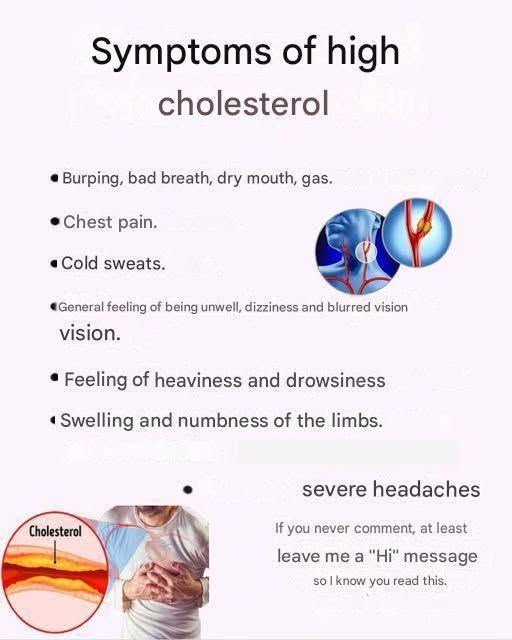
If you’re fact-checking “High Cholesterol: The Silent Enemy That Doesn’t Always Show Its Face,” the central claim is accurate: high cholesterol usually causes no symptoms, which is why a person can feel completely healthy while LDL cholesterol is contributing to plaque buildup in the arteries.
W
www.heart.org
+1
Why it matters
LDL (“bad”) cholesterol can accumulate in artery walls and contribute to atherosclerosis. Over time, this can increase the risk of heart attack, stroke, and peripheral artery disease.
W
www.heart.org
You generally can’t tell from how you feel whether your cholesterol is high. A lipid panel blood test measures LDL, HDL, triglycerides, and total cholesterol.
W
www.heart.org
What raises LDL?
Risk can be influenced by:
Diet high in saturated or trans fats
Physical inactivity
Excess weight
Tobacco exposure
Age and family history
Inherited conditions such as familial hypercholesterolemia
W
www.heart.org
And having high cholesterol isn’t necessarily the result of eating poorly—genetics can play a major role.
What should you do?
A heart-healthy eating pattern emphasizing vegetables, fruits, whole grains, beans, nuts, seeds, unsaturated fats and lean proteins, along with regular physical activity and avoiding tobacco, can help improve cardiovascular risk. Some people also need cholesterol-lowering medication depending on their overall risk.
W
www.heart.org
Importantly, there is no single LDL number that’s appropriate for everyone. Someone who has already had a heart attack or stroke may have a substantially lower LDL goal than someone at average risk.
W
www.heart.org
Bottom line: The “silent enemy” description is reasonable because high cholesterol often produces no warning symptoms. The way to find it isn’t to look for signs—it’s to get your cholesterol checked and interpret the result alongside your overall cardiovascular risk.
W
www.heart.org
W
Sources