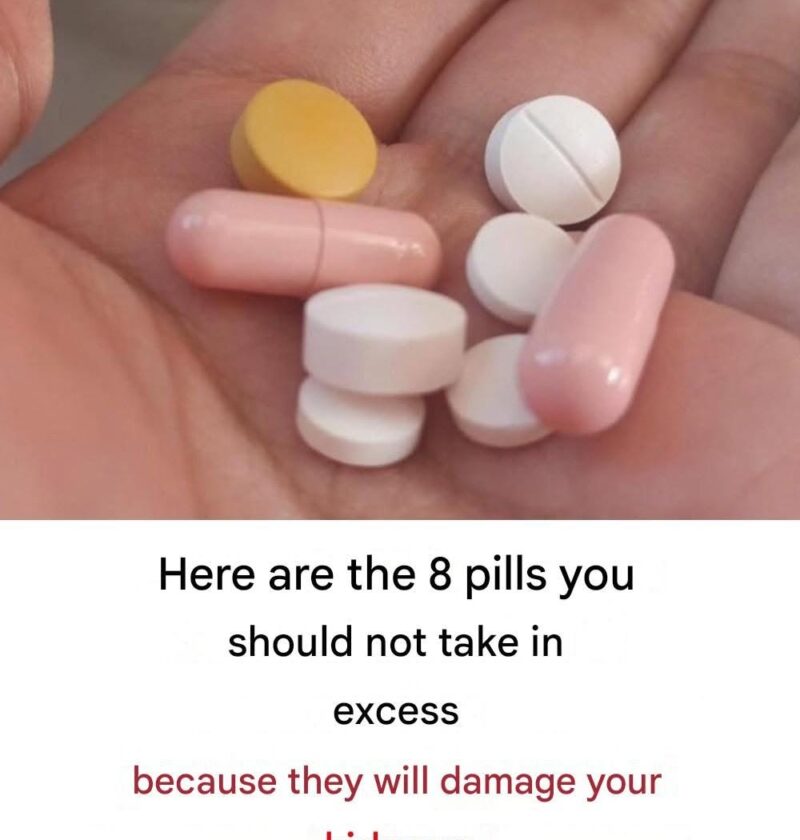
8 Pills That Can Harm the Kidneys—Especially With Long-Term or Improper Use
The headline “you shouldn’t take” is too absolute. Many medications on this list are useful and safe for appropriate patients. The risk depends on the drug, dose, duration, kidney function, dehydration, and other medicines being taken.
N
NIDDK
+1
Eight important examples are:
Ibuprofen — an NSAID that can reduce blood flow to the kidneys and cause acute kidney injury, particularly with high doses, prolonged use, dehydration, or existing kidney disease.
Naproxen — another NSAID with similar kidney risks.
Diclofenac tablets/capsules — an NSAID that can affect kidney blood flow.
Ketorolac — a stronger NSAID generally intended for short-term use; kidney risk is an important consideration.
Meloxicam — an NSAID that can worsen kidney function, especially in people with chronic kidney disease.
Celecoxib — another NSAID that can affect kidney function.
High-dose aspirin — doses above about 325 mg/day act like an NSAID with respect to kidney effects. This is different from low-dose aspirin prescribed for cardiovascular protection.
N
National Kidney Foundation
+1
Some proton-pump inhibitors (PPIs), such as omeprazole — long-term use has been associated with kidney problems, although the risk is much less straightforward than with NSAIDs and short-term use isn’t generally expected to cause kidney-related problems.
N
National Kidney Foundation
Don’t stop prescribed medication on your own
Some medicines that can affect the kidneys are still the right treatment for a particular person. Antibiotics, antivirals, lithium, and many other drugs may require kidney-function-based dose adjustments rather than automatic avoidance.
N
National Kidney Foundation
If you have kidney disease, high blood pressure, heart failure, diabetes, or take several medications, ask your pharmacist or doctor before regularly using an over-the-counter painkiller.
One particularly important rule: avoid routinely self-treating with NSAIDs such as ibuprofen or naproxen if you have chronic kidney disease unless your healthcare professional specifically tells you to use them.
N
National Kidney Foundation
Bottom line: The biggest medication-related kidney concern for many people is frequent or high-dose NSAID use, not that all eight drugs are inherently “bad for the kidneys.”
N
N
Sources