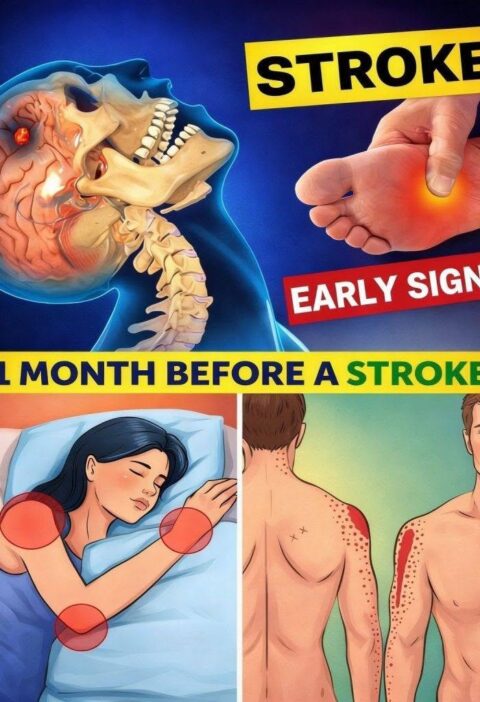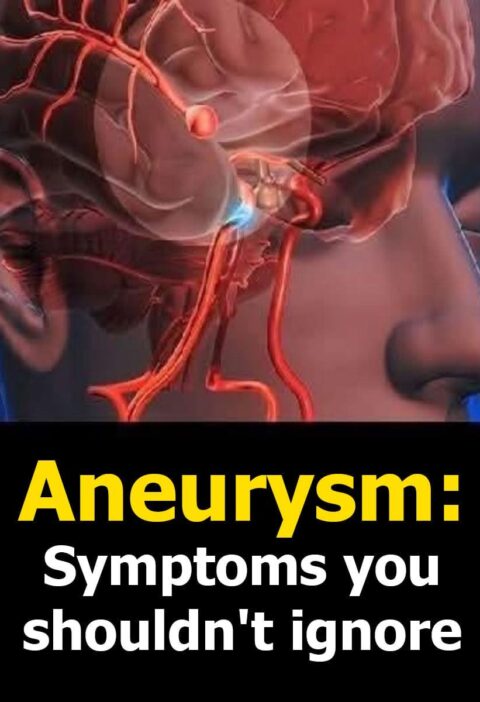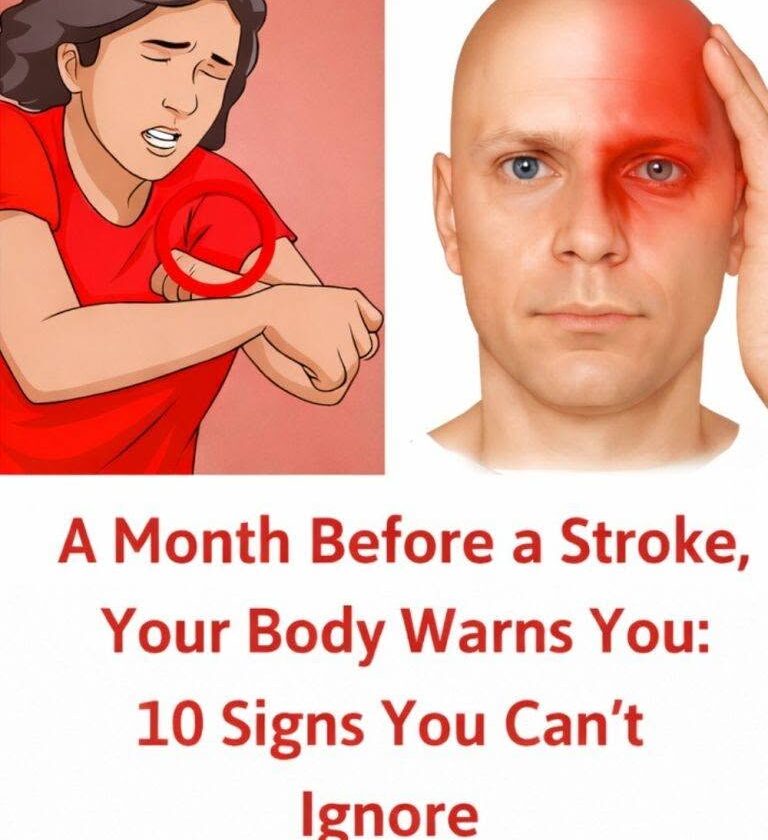
The headline “A month before a stroke, your body warns you: 10 signs not to ignore” is misleading. There is no reliable set of 10 symptoms that predict a stroke exactly one month in advance. However, some people experience a transient ischemic attack (TIA)—sometimes called a “warning stroke”—before a major stroke.
W
www.stroke.org
+1
10 warning signs that deserve urgent attention
Sudden weakness or numbness — especially in the face, arm, or leg on one side.
Sudden facial drooping — one side of the face may feel numb or look uneven when smiling.
Sudden difficulty speaking — slurred speech or inability to find the right words.
Sudden difficulty understanding speech — confusion about what others are saying.
Sudden vision changes — blurred, double, or lost vision in one or both eyes.
Sudden dizziness or loss of balance — particularly when it comes on unexpectedly.
Sudden trouble walking or coordinating movements.
A sudden, severe headache with no obvious cause.
Sudden confusion or disorientation.
Symptoms that disappear after a few minutes — this can be a TIA and is not something to dismiss.
W
www.stroke.org
+2
The key message: B.E. F.A.S.T.
B — Balance loss
E — Eye/vision changes
F — Face drooping
A — Arm weakness
S — Speech difficulty
T — Time to get emergency help
These symptoms generally appear suddenly, rather than gradually over a month. If they occur—even if they completely disappear—treat them as an emergency and seek immediate medical attention. A TIA can signal an increased risk of a subsequent stroke, particularly in the days and weeks afterward.
W
www.stroke.org
+1
Don’t wait for symptoms to become severe or “see if they pass.” Early assessment can identify treatable causes and help reduce the risk of a major stroke.
W
www.stroke.org
W
Sources