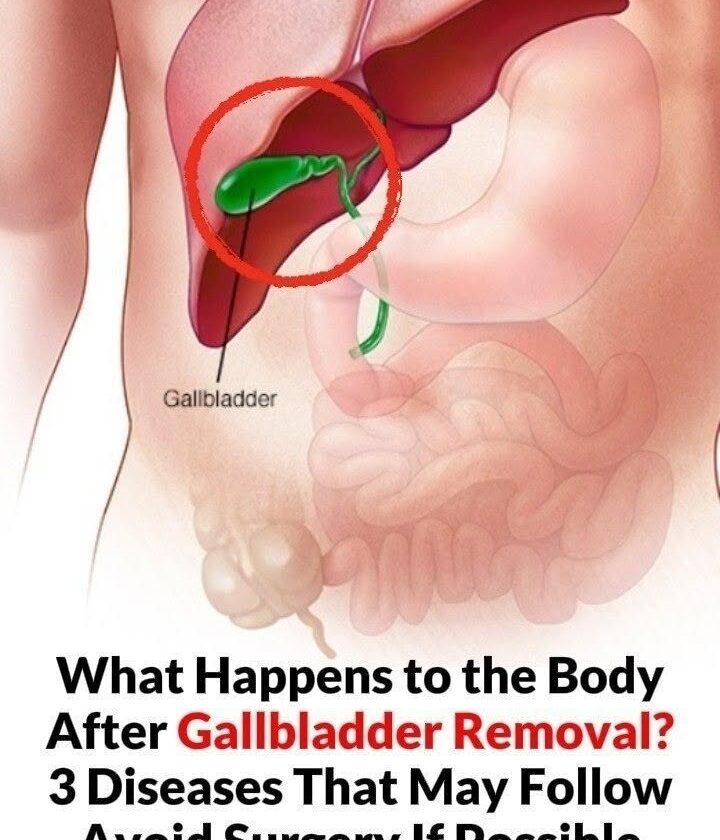
Gallbladder removal, called Cholecystectomy, is one of the most common and well-studied surgeries in the world.
Doctors recommend it when there are:
- Painful gallstones
- Gallbladder inflammation (cholecystitis)
- Blocked bile flow
- Risk of serious complications like infection or pancreatitis
If needed, avoiding surgery can actually be more dangerous than having it.
What these viral posts usually claim
They often say you may develop:
- Lifelong digestive problems
- Chronic diarrhea
- Nutrient issues
- “Liver overload” or bile damage
Some of this is partially based on real, mild side effects—but presented in an extreme way.
3 real things that can happen after surgery (but often mild)
1. Loose stools (temporary in some people)
After Cholecystectomy:
- Bile flows continuously into the intestine
- Some people get mild diarrhea
- Usually improves over weeks or months
2. Bloating or indigestion
- Fat digestion may feel different at first
- Heavy or greasy meals can cause discomfort
- Most people adapt over time
3. Rare bile-related issues
A small number of patients may experience:
- Bile reflux
- Sphincter of Oddi dysfunction
These are uncommon, and treatable.
What these posts ignore (very important)
They rarely mention that leaving a diseased gallbladder untreated can cause:
- Severe infection
- Gallbladder rupture (emergency)
- Pancreatitis
- Repeated intense pain attacks
These risks are often far more serious than post-surgery symptoms.
Reality check
For most patients:
- Surgery removes pain permanently
- Recovery is quick (often laparoscopic)
- Long-term life is normal
Most people do not develop major chronic problems.
Why this misinformation spreads
These articles are designed to:
- Create fear of surgery
- Push “natural alternatives”
- Get clicks using scary wording
- Oversimplify complex medical decisions
Bottom line
Cholecystectomy is not a surgery to avoid by default. It is a safe, standard treatment when medically necessary. While minor digestive changes can happen, serious long-term complications are uncommon, and untreated gallbladder disease can be much more dangerous.
If you want, I can also explain:
- Life after gallbladder removal (diet + digestion)
- Foods to avoid in the first month
- Or whether gallstones can be treated without surgery in some cases