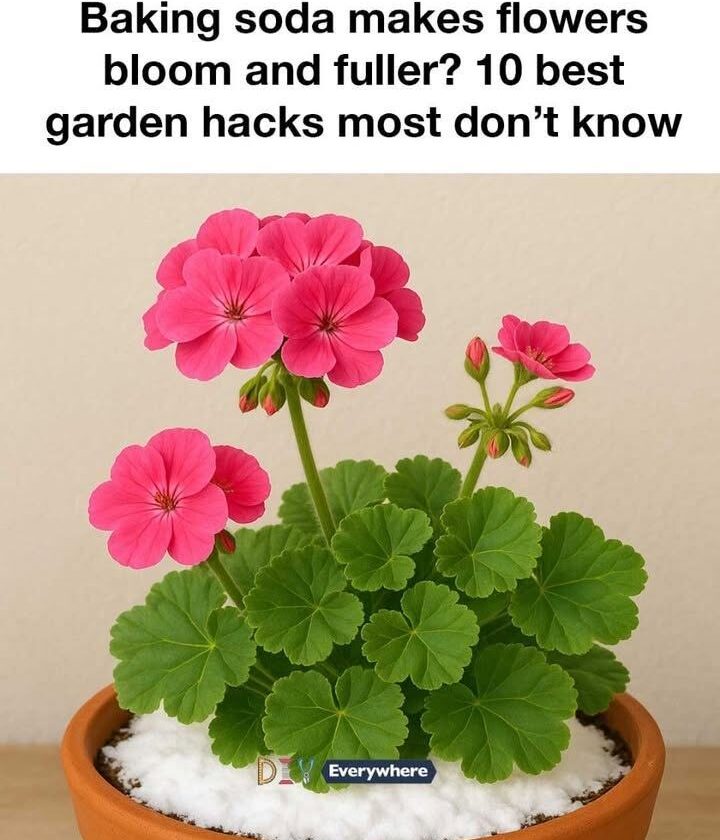
DOES BAKING SODA REALLY MAKE FLOWERS BLOOM BIGGER?
10 GARDEN HACKS MOST PEOPLE DON’T KNOW
You’ve probably heard that sprinkling baking soda around plants makes flowers bloom bigger and fuller. There’s a catch: baking soda isn’t a reliable fertilizer or bloom booster, and using too much can damage plants and soil.
But there are plenty of simple gardening tricks that really can make a difference.
🌱 1. Test your soil before adding anything
Plants perform best when the soil pH and nutrients match their needs. Don’t add lime, baking soda, or other amendments blindly.
☀️ 2. Match plants to the right sunlight
A sun-loving plant won’t necessarily thrive in a shady corner. Check whether your plant needs full sun, partial shade, or shade.
💧 3. Water deeply rather than constantly
For many established plants, deep watering encourages roots to grow farther into the soil. Avoid keeping the soil constantly soggy.
🍂 4. Use mulch
A layer of organic mulch can help retain moisture, moderate soil temperature, and reduce competition from weeds. Keep mulch away from direct contact with plant stems.
✂️ 5. Remove spent flowers
For many flowering plants, deadheading can encourage additional blooms by preventing the plant from putting as much energy into seed production.
🌿 6. Don’t over-fertilize
More fertilizer doesn’t automatically mean more flowers. Excess nutrients—especially nitrogen—can encourage leafy growth at the expense of flowering in some plants.
🪴 7. Improve compacted soil
If water runs off instead of soaking in, the soil may be compacted. Improving soil structure with appropriate organic matter can help roots access air and water.
🐝 8. Plant for pollinators
Flowers that provide nectar and pollen can attract bees, butterflies, and other beneficial insects. Choose plants suited to your local climate.
🌸 9. Give crowded plants more room
Overcrowding can increase competition for light, water, and nutrients and may reduce air circulation. Follow the spacing recommendations for each plant.
🔍 10. Check the leaves regularly
Yellowing, spots, holes, wilting, or distorted new growth can be early signs of watering problems, pests, disease, or nutrient issues. Catching problems early is much easier than rescuing a severely damaged plant.
🌼 What about baking soda?
Baking soda has some specific gardening uses, but it’s not a magic ingredient that makes every flower bloom fuller. Before applying it to soil or foliage, consider the plant, the soil pH, and the concentration.
The best “garden hack” is usually simple: give the right plant the right light, water, soil, and nutrients.
🌱 Which of these gardening tricks have you tried?