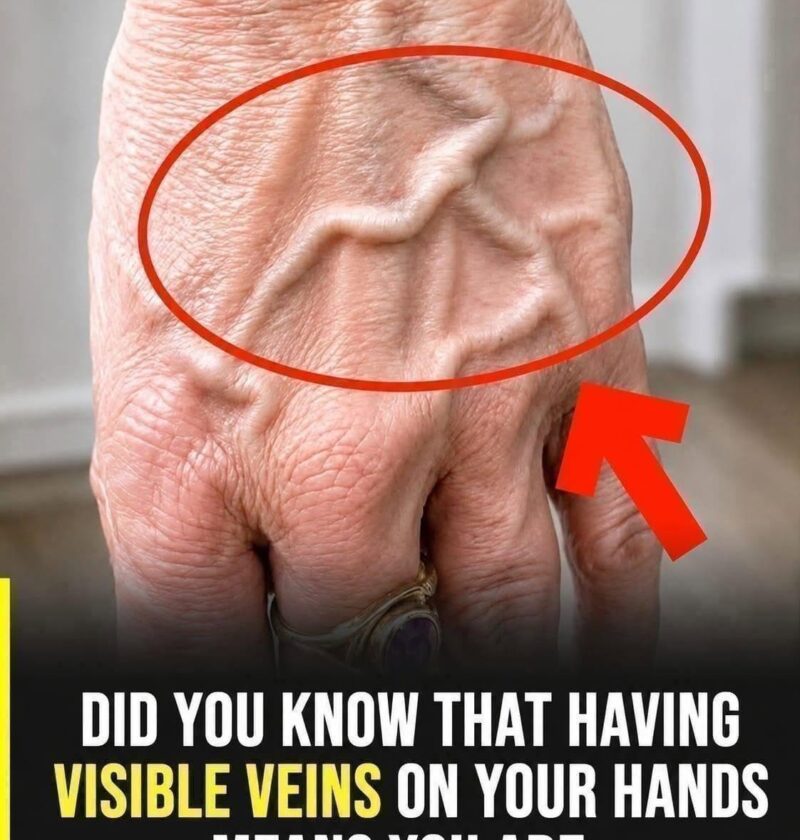
Did You Know? Having Visible Veins Usually Means…
Visible veins don’t automatically indicate a health problem. In many people, they’re simply easier to see because of genetics, age, exercise, skin thickness, or lower body fat.
Common reasons include:
Low body fat: Less tissue covers superficial veins, making them more noticeable.
Exercise: Increased blood flow and developed muscles can temporarily make veins stand out.
Heat: Warm temperatures cause blood vessels near the skin to widen.
Age: Skin gradually becomes thinner and less elastic, making veins more visible.
Genetics: Some people naturally have more prominent superficial veins.
When should you pay attention?
A vein that becomes suddenly swollen, painful, red, warm, or tender, particularly in one leg, deserves medical assessment because these can be symptoms of a blood clot.
Likewise, new prominent veins accompanied by swelling, skin-color changes, pain, or sores that don’t heal should be evaluated.
Bottom line: Visible veins by themselves usually just mean your superficial veins are easy to see. They do not prove that you have good circulation, blocked arteries, high blood pressure, or a vitamin deficiency.