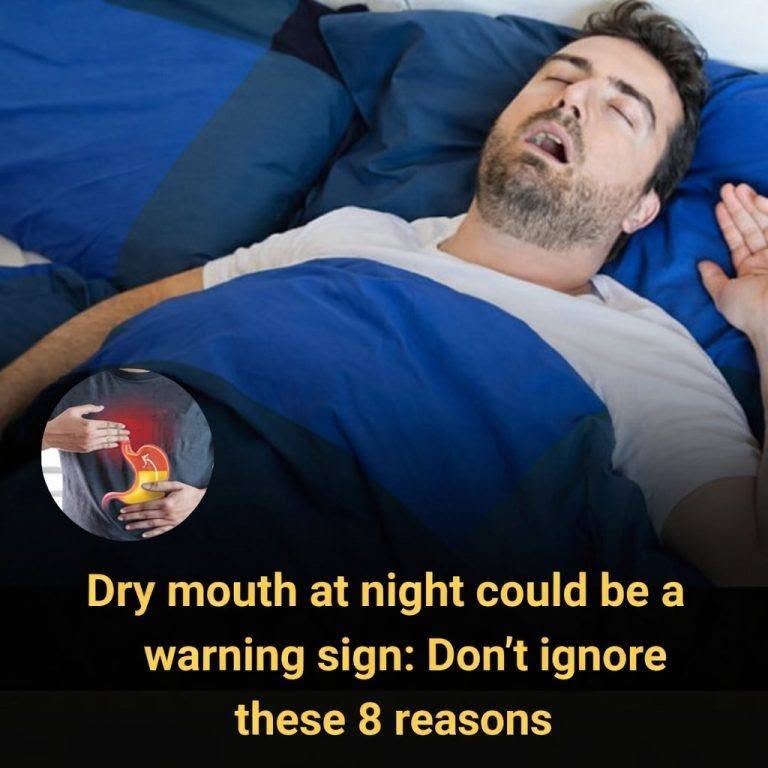
Dry mouth at night can be more than just an annoyance. Occasional dryness may happen from sleeping with your mouth open or from a dry room, but persistent dry mouth can sometimes point to an underlying issue.
Here are 8 signs associated with nighttime dry mouth that are worth paying attention to:
👄 1. Waking up with a very dry or sticky mouth
- Needing water immediately upon waking
- Feeling like your tongue is sticking to the roof of your mouth
🗣️ 2. Difficulty speaking or a hoarse voice in the morning
- Dry tissues can make talking uncomfortable
- Your voice may sound rough until you hydrate
👅 3. Dry, rough, or cracked tongue
- The tongue may feel unusually rough
- Some people notice grooves or soreness
💋 4. Cracked lips or sores at the corners of the mouth
- Saliva helps keep the lips and mouth tissues healthy
- Chronic dryness can lead to irritation
🦷 5. Increased tooth decay or sensitivity
- Saliva helps protect teeth from acids and bacteria
- Less saliva can increase cavity risk
😮💨 6. Bad breath (halitosis)
- Dryness allows odor-causing bacteria to thrive more easily
🍽️ 7. Difficulty chewing, swallowing, or tasting food
- Saliva plays an important role in all three functions
😴 8. Snoring or waking frequently during the night
- Mouth breathing during sleep can contribute to dry mouth
- In some cases, it may be associated with sleep-disordered breathing, including Obstructive Sleep Apnea
Common causes
Nighttime dry mouth can be related to:
- Mouth breathing due to nasal congestion
- Dehydration
- Certain medications (including some antihistamines, antidepressants, and blood pressure medicines)
- Smoking
- Diabetes
- Autoimmune conditions such as Sjögren’s Syndrome
When to see a healthcare professional
Consider getting evaluated if:
- Dry mouth persists for several weeks
- You develop frequent cavities or oral infections
- You have difficulty swallowing
- You snore heavily, gasp during sleep, or feel excessively tired during the day
- You have other symptoms such as dry eyes, unexplained weight loss, or excessive thirst
Bottom line
Dry mouth at night is often caused by simple factors like dehydration or mouth breathing, but persistent dry mouth shouldn’t be ignored, especially if it’s affecting your teeth, sleep, or overall comfort. Identifying and treating the underlying cause is usually more effective than just drinking more water before bed.