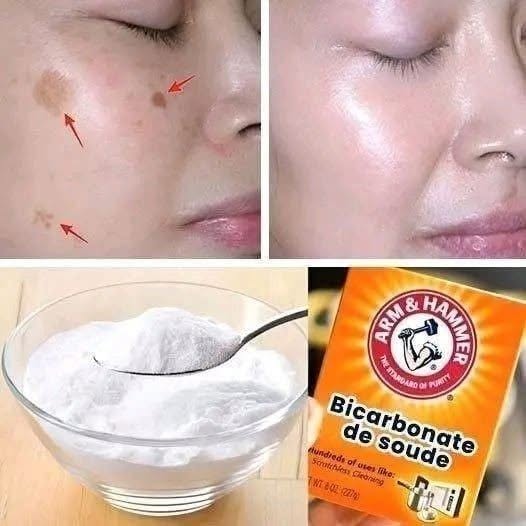
The claim that baking soda can remove dark spots, wrinkles, and dark circles is not well supported, and putting baking soda directly on your face can irritate the skin. Dermatologists specifically warn that irritating skincare products can make dark spots more noticeable. (American Academy of Dermatology)
🧴 What about a baking-soda paste?
I wouldn’t recommend using a baking-soda-and-water paste on the face, particularly around the eyes. Baking soda is alkaline and can be irritating or drying, and scrubbing it into the skin can cause inflammation. Irritation itself can contribute to hyperpigmentation. (American Academy of Dermatology)
Better options
For dark spots:
Look for products containing vitamin C, azelaic acid, glycolic acid, kojic acid, or a retinoid. Daily broad-spectrum SPF 30+ sunscreen is particularly important because sunlight can worsen pigmentation. (American Academy of Dermatology)
For wrinkles:
Daily sunscreen and moisturizer are foundational. Retinoids can also improve signs of photoaging, although they may irritate sensitive skin and should be introduced carefully. (American Academy of Dermatology)
For dark circles:
The cause matters. Genetics, pigmentation, allergies, lack of sleep, and the natural hollowing/shadowing around the eyes can all contribute. Baking soda won’t reliably correct these causes.
⚠️ If you already used baking soda
If your skin is burning, stinging, red, or itchy, rinse it off gently, stop using it, and apply a bland moisturizer. Don’t scrub the area or add other active ingredients until the irritation settles. Dermatologists recommend stopping products that sting or burn and patch-testing new skincare products first. (American Academy of Dermatology)
Bottom line: Baking soda is useful in the kitchen, but it isn’t a proven anti-aging or dark-spot treatment, and facial use can backfire.