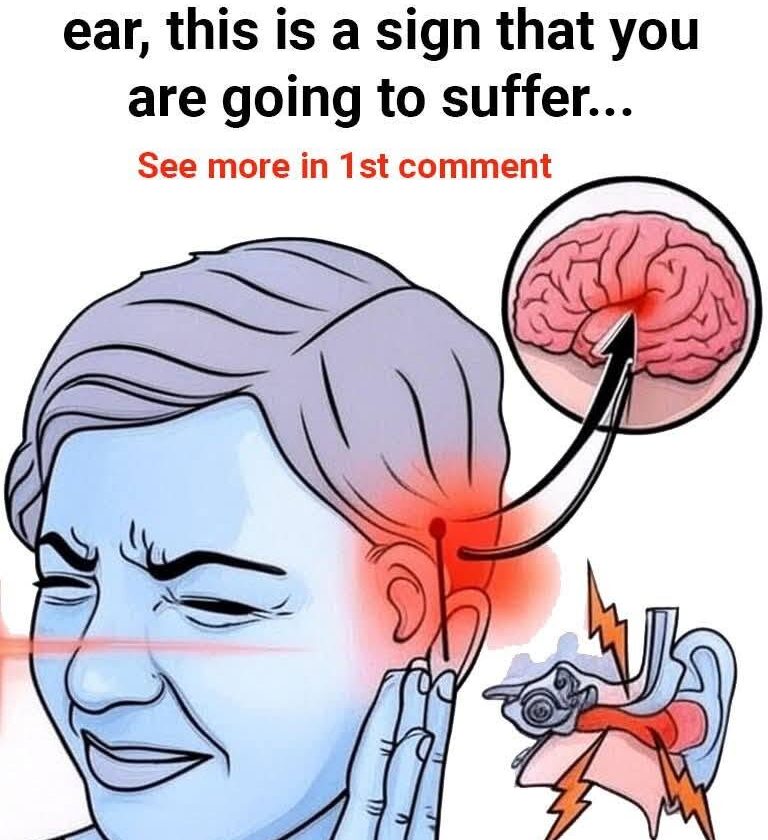
Posts that say “If you hear ringing in your ear, this is a sign that you will suffer from…” are usually clickbait. Ringing in the ears (tinnitus) is a symptom, not a reliable predictor that you will develop a specific disease.
Common causes of tinnitus include:
- Exposure to loud noise (concerts, machinery, headphones at high volume)
- Age-related hearing loss
- Earwax buildup
- Certain medications, including some antibiotics, chemotherapy drugs, and high doses of aspirin
- Ear infections or problems with the middle or inner ear
- Conditions such as high blood pressure or temporomandibular joint (TMJ) disorders in some people
Is it dangerous?
Often, tinnitus is not a sign of a serious illness, especially if it’s mild and comes and goes. However, you should see a healthcare professional if:
- It starts suddenly.
- It affects only one ear.
- It’s accompanied by hearing loss, dizziness, or a feeling that the room is spinning.
- You hear a rhythmic “whooshing” sound that matches your heartbeat (called pulsatile tinnitus).
- It’s persistent or interfering with sleep or daily life.
What may help
- Protect your hearing by avoiding excessive noise and using hearing protection when needed.
- Keep headphone volume at moderate levels.
- Manage stress, which can make tinnitus more noticeable.
- Limit caffeine or alcohol if you notice they worsen your symptoms.
- If hearing loss is present, treating it (for example, with hearing aids when appropriate) may reduce tinnitus for some people.
If you’re experiencing ringing in your ears, tell me:
- Is it in one ear or both?
- Is it constant or intermittent?
- How long has it been happening?
- Do you also have hearing loss, dizziness, ear pain, or recent loud-noise exposure?
That information can help narrow down the possible causes.