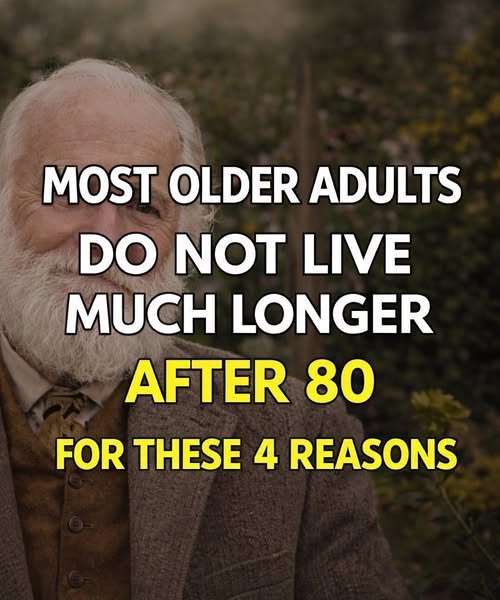
“Most older adults don’t live much past 80” — is that true?
No. That headline is misleading. Life expectancy is an average, not an age at which most people die. In the U.S., someone who reaches 65 had an average of 19.7 additional years of life in 2024—roughly to age 85.
C
CDC
+1
Mortality does increase substantially with age: in 2024, the death rate was about 4,264 per 100,000 among ages 75–84 and 13,834 per 100,000 among those 85+. But that doesn’t mean most people die shortly after 80.
C
CDC
Four major threats to longevity after 75
Heart disease ❤️ — the leading cause of death among older adults.
Cancer — remains one of the largest causes of mortality.
Stroke and other cerebrovascular disease — risk increases with age, particularly with uncontrolled blood pressure and other cardiovascular risk factors.
Chronic respiratory disease and Alzheimer’s disease — both are among the leading causes of death in adults 65 and older.
C
CDC
Falls deserve special attention too: they are the leading cause of fatal and nonfatal injuries among adults 65+, and the risk of serious injury rises with age.
C
CDC
What can you do?
There isn’t a way to guarantee a particular lifespan, but you can improve your odds of staying healthy by:
Keeping blood pressure and cholesterol under control.
Not smoking.
Staying physically active and maintaining muscle and balance.
Eating a nutritious, mostly minimally processed diet.
Managing diabetes and other chronic conditions.
Keeping up with appropriate screening, vaccinations, and medical care.
Making the home safer to reduce fall risk.
Bottom line: 80 is not an “expiration date.” Current U.S. data show that people who reach 65 can expect, on average, nearly two more decades of life—and individual outcomes vary enormously.
C
CDC
C
Sources