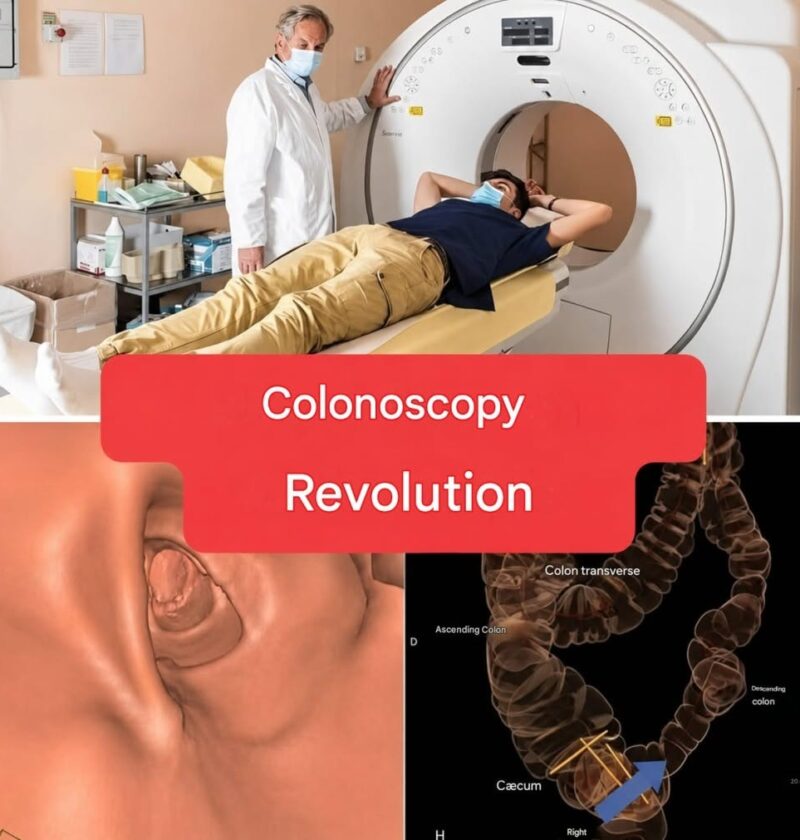
A standard Colonoscopy is still the most comprehensive test for examining the entire colon. It allows doctors not only to find abnormalities but also to remove polyps and take biopsies during the same procedure.
Researchers and healthcare providers are expanding the use of less invasive screening options, including:
- Stool-based tests that look for hidden blood or abnormal DNA. These are done at home and can help detect signs of Colorectal cancer, but a positive result usually requires a follow-up colonoscopy.
- CT colonography (sometimes called a “virtual colonoscopy”), which uses CT scans to create images of the colon. It is less invasive than a traditional colonoscopy but still requires bowel preparation, and any suspicious findings generally need to be confirmed or treated with a standard colonoscopy.
- Capsule endoscopy, in which a person swallows a tiny camera. This is useful for certain situations but is not currently a replacement for routine colonoscopy in most people.
These newer methods can make screening more comfortable for some patients and may increase screening rates, but they have not replaced traditional colonoscopy. For many people—especially those at higher risk or with abnormal screening results—a conventional colonoscopy remains the preferred test because it can diagnose and treat problems in a single procedure.
If you have concerns about colorectal cancer screening, a healthcare provider can help determine which screening option is most appropriate based on your age, personal risk factors, and family history.