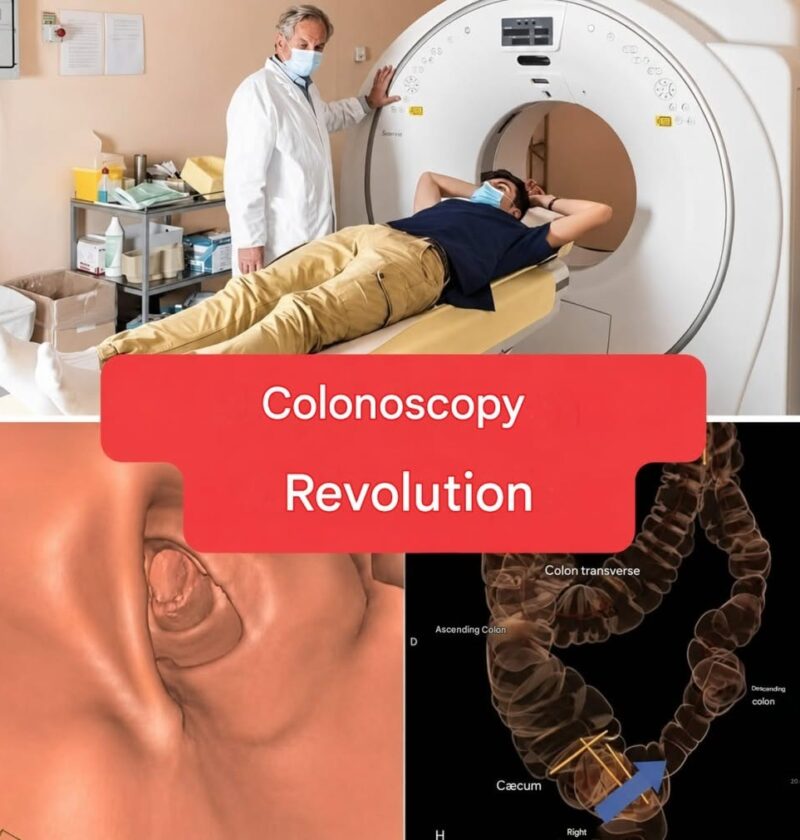
The statement “New method: colonoscopy will no longer be an invasive examination” refers to emerging technologies that aim to reduce the need for traditional colonoscopy, which currently requires inserting a flexible camera tube through the rectum to examine the large intestine. However, it is important to clarify: colonoscopy itself has not been replaced yet. New methods may reduce the number of people who need it, but they do not completely eliminate it in all cases. (Mayo Clinic)
Why is traditional colonoscopy considered invasive?
A standard colonoscopy involves:
- Bowel preparation with strong laxatives to empty the colon.
- Insertion of a flexible tube with a camera.
- Possible sedation.
- Removal of polyps or taking tissue samples (biopsies) if abnormalities are found. (Mayo Clinic)
Although it is considered a minimally invasive procedure compared with surgery, many patients dislike the preparation, discomfort, time required, and small risks such as bleeding or perforation.
New approaches that may make colonoscopy less necessary
1. Advanced stool and molecular tests
New tests analyze:
- DNA changes from cancer cells,
- Epigenetic markers,
- Microbiome (gut bacteria) patterns,
- Blood markers.
One example under investigation uses a small sample collection method and laboratory analysis to identify people at higher or lower risk of bowel cancer. The goal is to allow many low-risk people to avoid colonoscopy while sending higher-risk patients for further examination. (The Times)
2. Artificial intelligence (AI)-assisted screening
AI systems can analyze colonoscopy images in real time and help doctors detect small polyps that might otherwise be missed. These systems improve detection ability, but they still work during colonoscopy rather than replacing the procedure completely. (BMJ)
3. Virtual colonoscopy (CT colonography)
This method uses CT scans to create images of the colon without inserting a camera tube. It is less invasive, but:
- It cannot remove polyps.
- A suspicious finding may still require a traditional colonoscopy for biopsy or removal.
4. Capsule or “pill” cameras
Researchers have explored swallowable camera capsules that travel through the digestive tract and capture images. These are less invasive, but current versions generally cannot match colonoscopy’s ability to take biopsies or remove growths.
What the future may look like
A likely future model is:
Risk test → non-invasive screening → colonoscopy only for people who need it
Instead of millions of people undergoing colonoscopy for reassurance, only those with concerning results may need the invasive procedure. Research into non-invasive colorectal cancer detection, including blood, stool, imaging, and AI methods, is continuing. (ScienceDirect)
So the headline is partly true: future screening may become much less invasive, but colonoscopy remains the most complete test today because it can both find and treat abnormalities in the same session. (Mayo Clinic)
(If you provide the “(2/2)” part, I can explain that specific new method in detail.)