Over 200 People Are Killed by the “World’s Deadliest Food” Every Year — Yet Nearly 500 Million Still Eat It
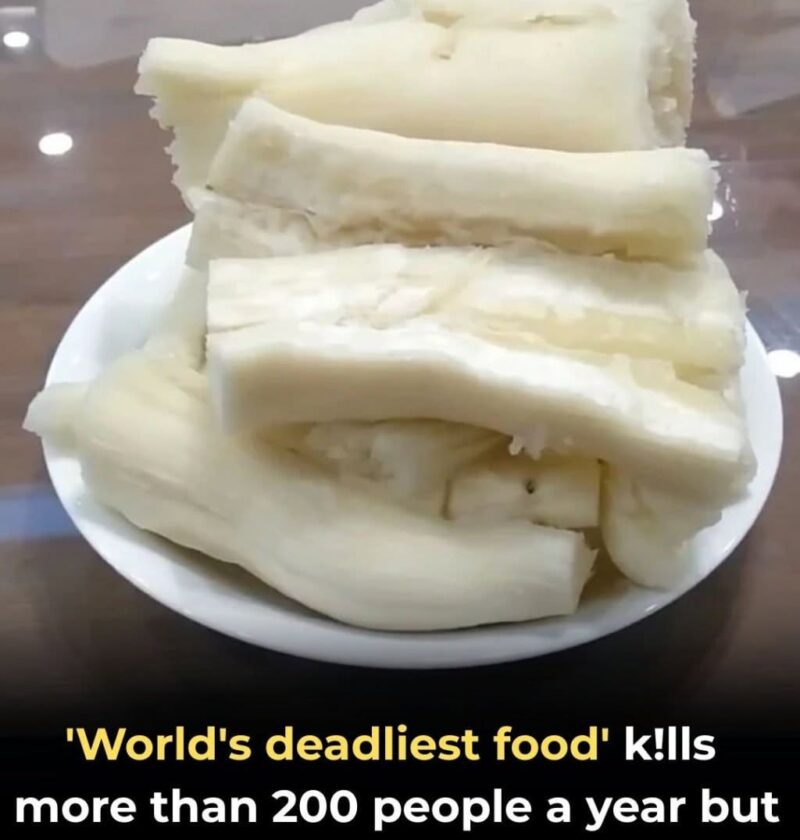
The food behind this alarming headline is cassava, also called manioc or yuca. But calling it the “world’s deadliest food” is sensationalized. Cassava is an important staple food, and it can be safe when properly processed. (Iris)
🌱 Why can cassava be dangerous?
Cassava naturally contains cyanogenic glycosides. When the plant is damaged or improperly processed, these compounds can release hydrogen cyanide, which is highly toxic. The concentration varies considerably between varieties, with some bitter varieties containing much more than sweeter varieties. (CDC)
Eating cassava that hasn’t been adequately processed can cause acute cyanide poisoning, which may lead to vomiting, abdominal symptoms, dizziness, breathing problems, seizures, loss of consciousness, and potentially death. Repeated exposure to insufficiently processed cassava has also been associated with neurological disorders such as konzo, a form of irreversible paralysis. (CDC)
🍠 Why do hundreds of millions still eat it?
Because cassava is an extremely important source of calories and carbohydrates in tropical regions. WHO materials estimate that around 200 million people derive a substantial proportion of their daily calories from cassava, while older literature commonly cites more than 500 million people consuming it as a staple. (Iris)
The key is proper processing. Depending on the variety and traditional method, this can involve peeling, grating, soaking or fermenting, drying, and thorough cooking. These processes substantially reduce cyanogenic compounds. (PubMed Central (PMC))
⚠️ Don’t eat cassava raw
The biggest takeaway isn’t “avoid cassava.” It’s never consume raw or improperly processed cassava, particularly bitter or wild varieties. Commercial cassava products that have been appropriately processed are generally intended to be safe.
And the frequently repeated figure of “200 deaths every year” should be treated cautiously: cassava poisoning is underreported in many regions, so the true global burden is difficult to determine. WHO sources specifically note gaps in the available data. (Iris)
Bottom line: Cassava isn’t inherently a deadly food. It’s a nutritious staple with a natural cyanide hazard that traditional and modern food-processing methods are designed to remove.