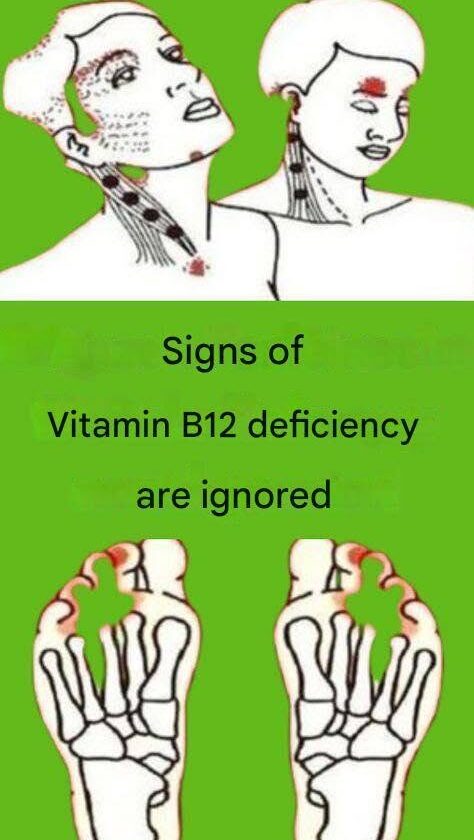
If you mean “signs of vitamin B12 deficiency that are easy to ignore,” the condition can develop gradually, and some symptoms may be mistaken for normal aging, stress, or poor sleep. Importantly, neurological symptoms can occur even without anemia.
O
ODs
+1
Common signs people overlook
Persistent tiredness or weakness — B12 deficiency can cause megaloblastic anemia, reducing the blood’s ability to carry oxygen.
O
ODs
Pins and needles or numbness — especially in the hands or feet; this can indicate nerve involvement.
N
nhs.uk
Balance or coordination problems — unexplained unsteadiness can occur with neurological B12 deficiency.
N
nhs.uk
Memory or concentration problems — confusion, poor memory and other cognitive changes are possible.
O
ODs
A sore, red or swollen tongue — mouth ulcers can also occur.
N
nhs.uk
Muscle weakness — particularly when it occurs together with numbness or balance problems.
N
nhs.uk
Pale skin or heart palpitations — these can accompany B12-related anemia.
O
ODs
Vision problems — less commonly, B12 deficiency can affect vision.
N
nhs.uk
Who is more likely to develop it?
Risk can be higher with little or no intake of animal foods, problems absorbing B12, stomach or intestinal disorders/surgery, pernicious anemia, and prolonged use of some medicines such as metformin or proton-pump inhibitors.
O
ODs
+1
Don’t diagnose it from symptoms alone
These symptoms have many possible causes. A clinician can evaluate them with blood testing, usually including B12 and a blood count; additional testing such as methylmalonic acid may help when the B12 result is borderline.
N
nhs.uk
+1
Why it’s worth checking: untreated B12 deficiency can cause nervous-system damage, and some neurological problems can become permanent if treatment is delayed.
N
nhs.uk
If you’re experiencing new numbness, weakness, balance problems, memory changes, or persistent unexplained fatigue, it’s reasonable to ask your clinician whether B12 testing is appropriate.
O
N
Sources