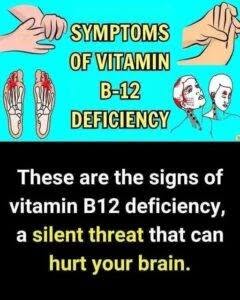
The headline “Signs of Vitamin B12 Deficiency You Should Never Ignore” highlights a real health issue, but many symptoms are not specific to B12 deficiency and can have many other causes. Vitamin B12 is important for red blood cell production, nerve function, and DNA production, and a deficiency can become more serious if it goes untreated.
Possible signs of vitamin B12 deficiency
1. Tingling or numbness
- A “pins and needles” feeling in the hands, feet, or legs.
- This happens because B12 is important for maintaining healthy nerves.
2. Balance problems
- Feeling unsteady, clumsy, or having difficulty walking can occur when nerve function is affected.
3. Unusual tiredness or weakness
- B12 deficiency can cause anaemia, reducing the amount of oxygen carried around the body.
4. Pale or yellowish skin
- Anaemia from B12 deficiency can make skin look paler.
- A slight yellow tint can occur due to changes in red blood cell breakdown.
5. Brain fog or concentration problems
- Some people report difficulty focusing, memory issues, or feeling mentally slowed down.
6. Mood changes
- Low B12 levels have been associated with irritability, depression, or other mood symptoms in some people.
7. Sore, red tongue
- A smooth, inflamed tongue (sometimes called glossitis) can occur.
8. Vision changes
- Rarely, severe untreated deficiency can affect the nerves involved in vision.
9. Heart palpitations or shortness of breath
- These may occur if anaemia becomes significant.
10. Reduced appetite or digestive symptoms
- Some people experience appetite changes, constipation, diarrhoea, or weight loss.
Who is more likely to be at risk?
B12 deficiency is more common in people who:
- Are older adults (absorption can decrease with age)
- Follow a strict vegan diet without B12 supplementation
- Have conditions affecting absorption (such as pernicious anaemia or certain bowel disorders)
- Have had some stomach or intestinal surgeries
- Take certain medications, including metformin or long-term acid-reducing medicines (such as proton pump inhibitors)
How it is diagnosed
A healthcare professional may check:
- Vitamin B12 blood level
- Complete blood count (CBC)
- Other markers such as methylmalonic acid (MMA) if needed
When to seek medical advice
It is worth getting checked if you have:
- Persistent numbness or tingling
- New balance problems
- Unexplained fatigue or weakness
- Memory or concentration changes