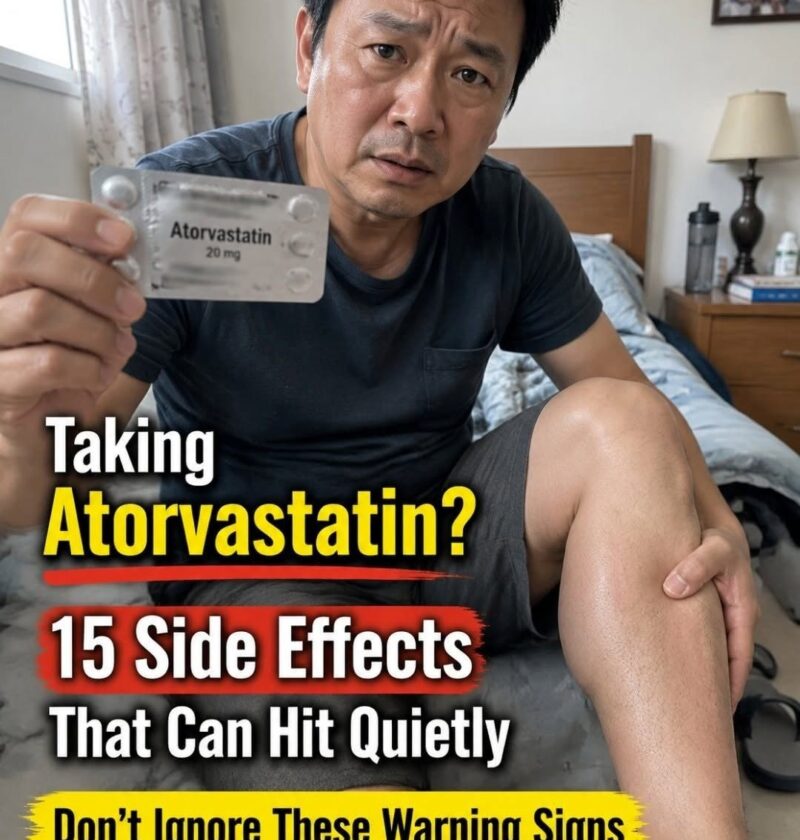
Atorvastatin is a statin medication used to lower cholesterol and reduce the risk of heart attack and stroke. Most people take it without significant problems, but some side effects can be subtle and may not be immediately linked to the medication.
15 subtle side effects that can occur with atorvastatin
- Muscle aches or soreness
- Mild muscle pain or stiffness is one of the more common side effects.
- Muscle weakness
- Difficulty climbing stairs, lifting objects, or performing usual activities.
- Fatigue
- Some people report feeling more tired than usual.
- Joint pain
- Aching or stiffness in joints can occur.
- Digestive upset
- Nausea, diarrhea, constipation, indigestion, or stomach discomfort.
- Headache
- Mild headaches may occur, especially when starting the medication.
- Sleep disturbances
- Some people report insomnia or unusual dreams, although this is less common.
- Memory or concentration concerns
- A small number of people report forgetfulness or difficulty concentrating. Research suggests these effects are uncommon and often improve after stopping the medication if it is the cause.
- Mild dizziness
- Especially when first starting treatment.
- Elevated liver enzymes
- Usually causes no symptoms and is detected through blood tests. Rarely, liver problems can cause yellowing of the skin or eyes, dark urine, or severe fatigue.
- Increased blood sugar
- Statins can slightly increase blood sugar levels and may contribute to diabetes in people who are already at higher risk.
- Skin rash or itching
- Mild skin reactions can occur.
- Tendon pain
- Rarely, people develop tendon discomfort or inflammation.
- Reduced exercise tolerance
- Muscle symptoms may make physical activity feel more difficult.
- Rare severe muscle injury (rhabdomyolysis)
- This is very uncommon but serious. Symptoms include severe muscle pain, profound weakness, and dark or cola-colored urine.
When to contact your healthcare professional
Seek medical advice if you develop:
- Persistent or worsening muscle pain or weakness
- Yellowing of the skin or eyes
- Dark urine
- Severe fatigue that is new or unexplained
- A rash with swelling or difficulty breathing
- Symptoms that interfere with daily life
Don’t stop atorvastatin on your own
If you think atorvastatin is causing side effects, do not stop taking it without speaking to the healthcare professional who prescribed it. For many people, the medication’s benefits in reducing the risk of heart attack and stroke outweigh the risk of side effects. If side effects occur, your clinician may recommend changing the dose, switching to a different statin, or trying another cholesterol-lowering medication.
If you’re taking atorvastatin and are concerned about a particular symptom, tell me:
- Your dose (for example, 10 mg, 20 mg, 40 mg, or 80 mg)
- How long you’ve been taking it
- What symptoms you’ve noticed and when they began
I can help you consider whether they could be related and what questions to discuss with your healthcare professional.