🌿 The “Best Homemade Weed Killer” — Does It Really Dry Weeds in 2 Hours?
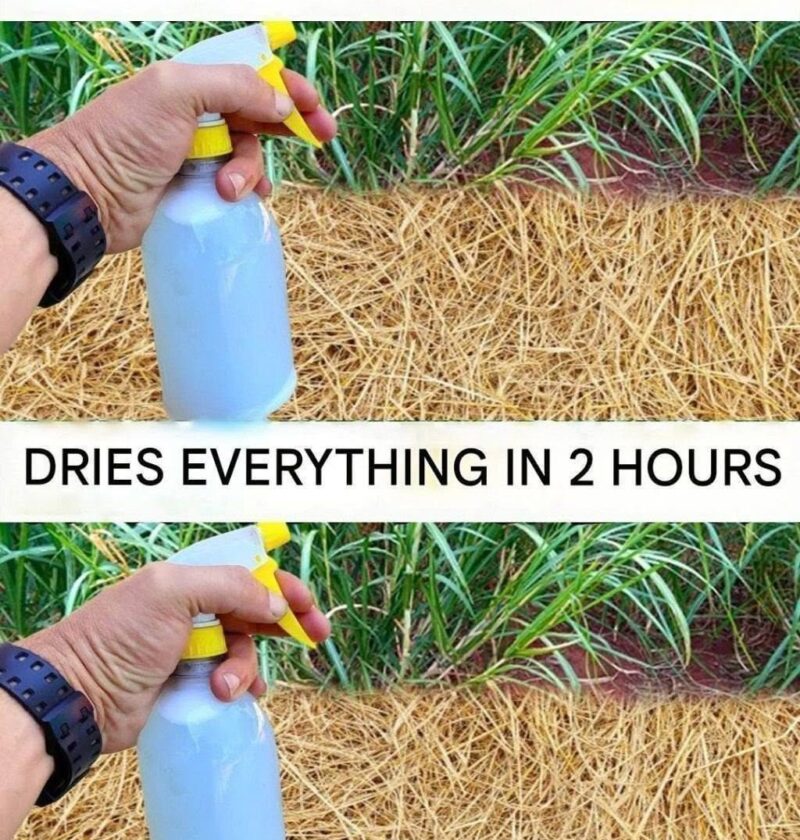
You may have seen recipes using vinegar, salt, and dish soap that promise to make weeds shrivel within a couple of hours. There is some truth behind the rapid browning—but the headline “no poison” and “kills everything permanently” is misleading.
Why it works
Vinegar (acetic acid) and salt can dehydrate and damage plant tissue, while soap helps the liquid spread over the leaves. Young weeds can brown quickly under hot, dry conditions. (UConn Extension)
But the important catch is that these are non-selective: they’ll damage desirable plants they contact too.
🚫 Don’t use salt in your garden beds
Salt can accumulate in soil and interfere with plant growth and soil health. Extension specialists specifically caution against homemade vinegar-and-salt mixtures around lawns, flower beds, trees, and other plants you want to keep. (Ask Extension)
What about ordinary kitchen vinegar?
Household vinegar is generally around 5% acetic acid. It can burn small, young annual weeds, but it often won’t kill established perennial weeds because their roots survive and the plant can regrow. (UConn Extension)
Stronger horticultural vinegar exists, but concentrated acetic acid can cause serious skin and eye injuries and requires appropriate precautions. (Ask Extension)
🌱 A safer approach
For weeds in cracks, patios, and other areas where you don’t want vegetation, pulling them or repeatedly removing them mechanically avoids leaving salt in the soil. Mulching planting beds can also suppress new weeds. (Ask Extension)
Bottom line: A vinegar-based mixture may make young weeds look dead within hours, but that’s not the same as killing the roots. And “natural” doesn’t mean harmless—salt can damage the soil and vinegar can injure desirable plants.