🌙 This Is Why We Get Cramps at Night
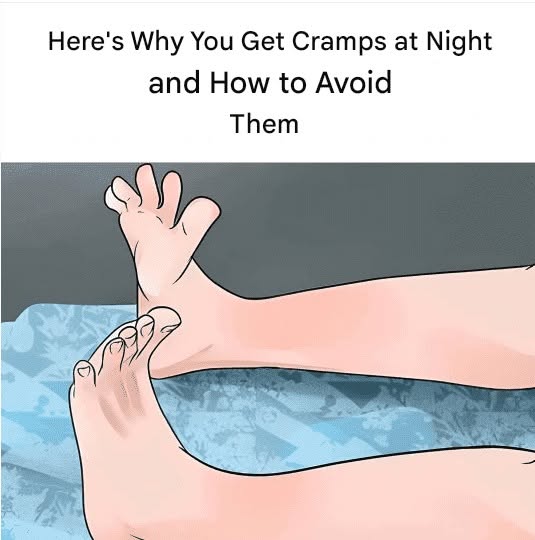
Waking up with a sudden, painful calf or foot cramp can be alarming. These episodes are called nocturnal leg cramps—involuntary muscle contractions that commonly occur during sleep or while resting. They usually last from a few seconds to several minutes and are generally harmless. (nhs.uk)
Why do they happen?
In many cases, there isn’t one identifiable cause. Researchers believe tired muscles and changes in nerve activity may play a role. Night cramps also become more common with age. (Mayo Clinic)
Possible contributing factors include:
- Dehydration, particularly after heavy sweating or exercise
- Muscle fatigue or overuse
- Long periods of sitting or inactivity
- Pregnancy
- Certain medications, including some diuretics and cholesterol-lowering medicines
- Certain health conditions affecting nerves, blood flow, or kidney function (nhs.uk)
It’s also important not to assume every nighttime cramp means you have a magnesium or potassium deficiency. Supplements aren’t automatically the answer.
🦵 What to do when a cramp strikes
Try to gently straighten the affected leg and pull your toes toward your face. Standing and putting weight on the affected leg, gently massaging the muscle, or using warmth may also help. (nhs.uk)
🌿 How to reduce nighttime cramps
- Stay adequately hydrated throughout the day.
- Gently stretch your calves before bed.
- Maintain regular physical activity.
- If you exercise heavily, replace fluids appropriately.
- Review medications with a doctor or pharmacist if cramps began after starting a new medicine. (nhs.uk)
⚠️ When should you get checked?
Talk to a healthcare professional if cramps regularly disrupt your sleep, last longer than about 10 minutes, or occur with numbness, swelling, muscle weakness, or loss of muscle mass. (nhs.uk)
Bottom line: Nighttime cramps are common and often have no single cause. Hydration, stretching, and gentle movement can help, but frequent or severe cramps deserve an evaluation rather than simply assuming you need more vitamins or minerals.