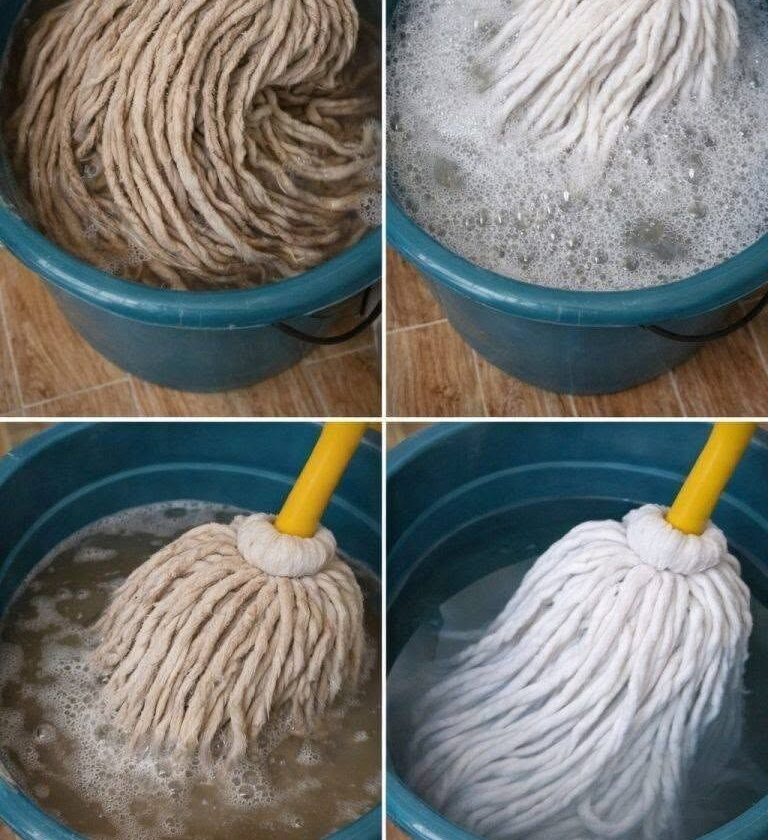
That headline is classic cleaning clickbait. The “one ingredient” is often presented as vinegar, baking soda, or another household additive, but a single drop will not magically restore a filthy mop.
A better method is:
- Rinse the mop head thoroughly to remove loose dirt.
- Soak it in warm water with a little detergent and scrub stubborn grime.
- Rinse very well.
- If disinfection is actually needed, use an appropriate disinfectant according to its label. The CDC recommends cleaning first, because dirt and organic material can interfere with disinfection. (CDC)
- Let the mop dry completely before storing it; a damp mop can develop odors and microbial growth.
What about vinegar?
Vinegar can help with odors and mineral buildup, but it isn’t a substitute for proper cleaning or a registered disinfectant. Also, don’t use vinegar indiscriminately on flooring—acidic cleaners can damage some surfaces such as natural stone and certain wood finishes. (Real Simple)
⚠️ Never mix vinegar with bleach or other incompatible cleaners. Bleach can produce dangerous fumes when mixed with other cleaning products. (CDC)
So the real “secret” isn’t a magical drop—it’s thorough washing, rinsing, appropriate disinfection when necessary, and complete drying.