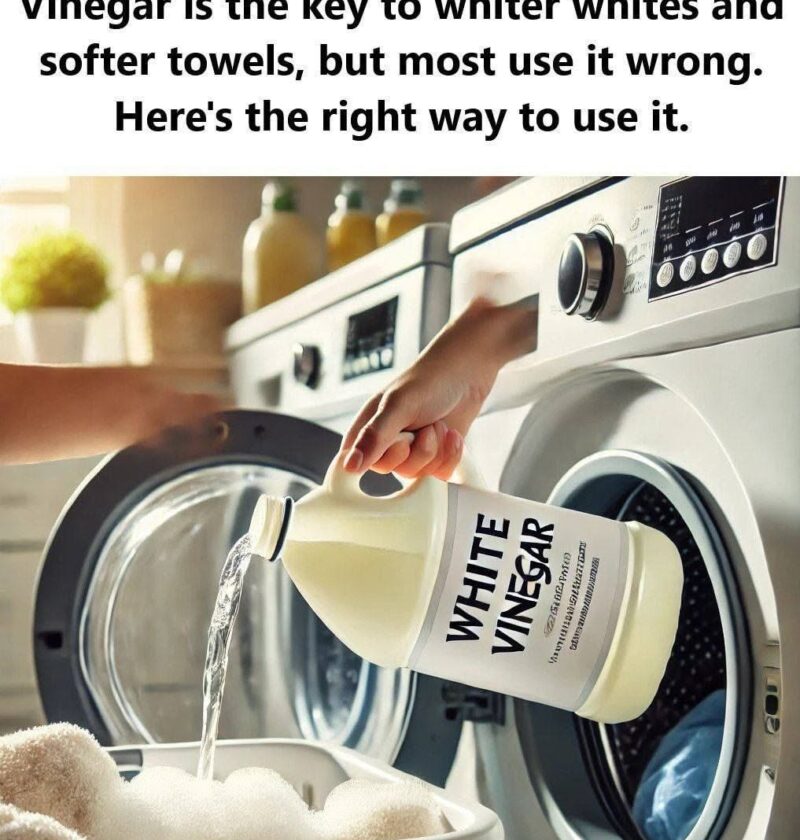
Vinegar for whiter whites and softer towels: what actually works
The viral claim is partly true, but vinegar isn’t a miracle whitener.
Distilled white vinegar can help remove detergent residue, hard-water mineral buildup, and musty odors, which can make towels feel softer and more absorbent. However, it isn’t as effective as a proper laundry bleach for restoring badly yellowed or stained whites.
C
Clorox Malaysia
+1
🧺 For towels
If your towels feel stiff or have a musty smell, one approach is to soak them separately in white vinegar, then rinse and wash normally. This can help dissolve mineral and detergent deposits.
C
Clorox Malaysia
For routine washing, however, there is an important caveat: some washing-machine manufacturers advise against regularly putting vinegar directly into the machine, because its acidity may eventually damage rubber components. Check your washer’s manual first.
M
Maytag
+1
🤍 For white clothes
Vinegar may help brighten slightly dingy whites, but if your goal is true whitening, oxygen bleach or an appropriate laundry bleach is generally more effective. Always follow the garment’s care label.
C
Clorox Malaysia
+1
⚠️ The most important rule
Never mix vinegar with chlorine bleach. The combination can produce dangerous chlorine-containing fumes.
M
Maytag
+1
Also avoid vinegar on materials that can be damaged by acids, such as some elastic fabrics and delicate textiles, unless the care instructions specifically permit it.
M
Maytag
Bottom line: Vinegar can be useful for residue, mineral buildup and odors, especially on towels, but it shouldn’t be treated as a universal fabric softener or whitening agent—and regular use in a washing machine isn’t recommended by all manufacturers.
C
M
Sources