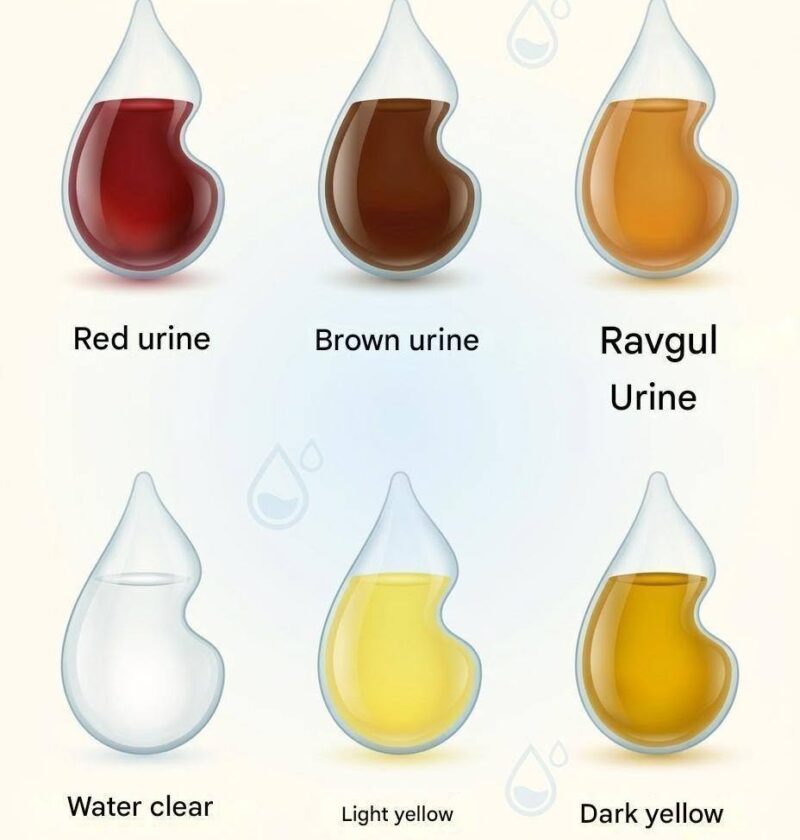
Urine color can give you useful clues about hydration, but it cannot diagnose your health by color alone. Food, vitamins, medicines, and medical conditions can all change urine color. (MedlinePlus)
🚽 What different colors may mean
| Urine color | Possible meaning |
|---|---|
| Clear / almost colorless | Usually means you’re very well hydrated; consistently drinking excessive amounts of water isn’t necessary. |
| Pale yellow | ✅ Generally a good sign of hydration. |
| Dark yellow / amber | Often means your urine is concentrated and you may need more fluids. Dark yellow urine is a common sign of dehydration. (nhs.uk) |
| Orange | Can occur with significant dehydration, but some medicines can also cause it. Persistent orange urine deserves medical attention. |
| Pink / red | May be caused by foods such as beetroot, but it can also indicate blood in the urine. Blood should be medically checked. (nhs.uk) |
| Brown / tea-colored | Can occur with severe dehydration, but may also be associated with liver problems or other conditions. (MedlinePlus) |
| Cloudy / milky | Can sometimes occur with a urinary infection, crystals, or other urinary problems, particularly if accompanied by burning, pain, fever, or frequent urination. (nhs.uk) |
| Bright/neon yellow | Often caused by B vitamins, particularly riboflavin, rather than a disease. (MedlinePlus) |
💧 What’s the “ideal” color?
For most healthy adults, pale yellow urine with a mild smell is a reasonable sign that you’re adequately hydrated. (Guy’s and St Thomas’ NHS Trust)
You don’t need your urine to be completely clear all day.
⚠️ When should you get checked?
Don’t simply drink more water if your urine is red, pink, or dark brown, especially if the color persists. Blood in urine should be evaluated even if there’s only a small amount or you have no other symptoms. (nhs.uk)
Also seek medical advice if unusual urine color occurs with fever, back/side pain, painful urination, yellow eyes/skin, very little urine, or significant dizziness.
Bottom line: Pale yellow = usually good hydration; dark yellow = often need more fluids; red/brown or persistent unusual colors = don’t assume it’s dehydration.