What Does the Color of Your Urine Say About Your Health?
Urine color can provide clues, but it can’t diagnose a disease by itself. Normal urine ranges from nearly clear to pale yellow, and the shade often changes simply according to how much fluid you’ve consumed.
M
Mayo Clinic
+1
The common colors
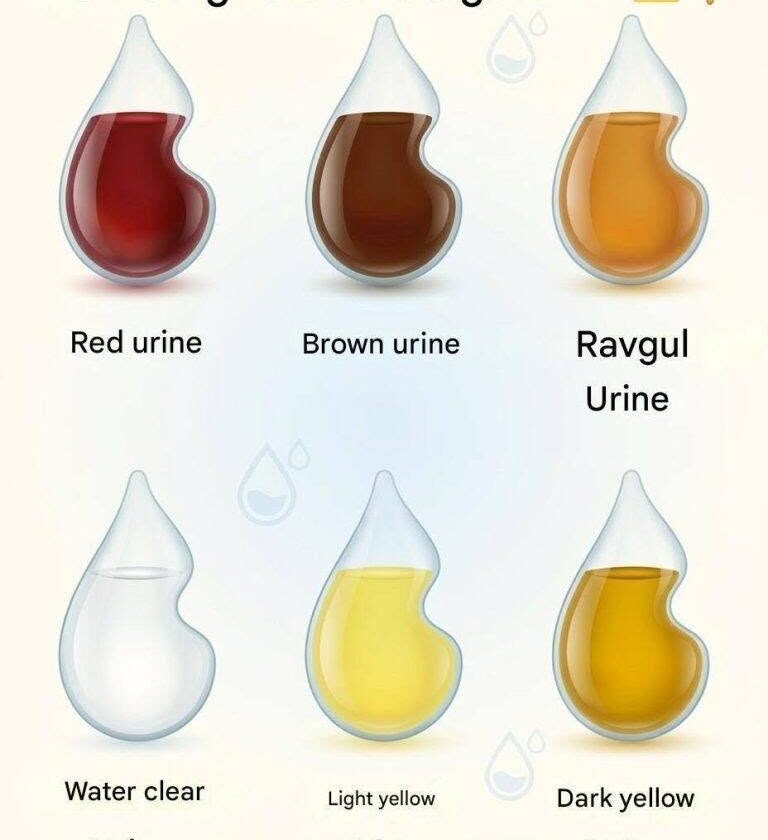
🟨 Pale yellow: Usually normal and consistent with good hydration.
💧 Very clear: Often means you’re drinking plenty of fluids. Constantly forcing large amounts of water isn’t necessary.
🟡 Dark yellow/amber: Often indicates concentrated urine and may mean you need more fluids, particularly if you’re also thirsty.
M
MedlinePlus
🟠 Orange: Can result from dehydration, certain medicines, or vitamins. If persistent—especially with yellow skin/eyes or pale stools—it can indicate a liver or bile-duct problem.
M
Mayo Clinic
🩷 Pink or red: Can be caused by beets or other foods, but it can also represent blood in the urine from conditions such as a UTI, kidney stone, prostate problem, or other urinary-tract disease. Visible blood should be medically evaluated.
M
Mayo Clinic
+1
🟤 Brown or cola-colored: May occur with severe dehydration, certain medicines or foods, liver/kidney problems, or significant muscle injury after extreme exercise.
M
Mayo Clinic
🟢 Green or blue: Uncommon. Food dyes, medications, medical dyes, and occasionally certain infections can produce these colors.
M
Mayo Clinic
☁️ Cloudy/milky: Can occur with a urinary infection or kidney stones, although there are other possible causes.
M
Mayo Clinic
Don’t judge your kidneys by color alone
Healthy-looking urine doesn’t prove that your kidneys are healthy. Kidney problems can exist without obvious changes in urine appearance. A urinalysis can check for things such as blood, protein, glucose, ketones, and other abnormalities.
M
MedlinePlus
+1
When to get checked
Seek medical advice if you have persistent red/bloody urine, unexplained dark or orange urine, markedly reduced urine output, or urine changes accompanied by pain, fever, jaundice, or other concerning symptoms.
M
Mayo Clinic
+1
Bottom line: Pale yellow is generally a normal color, while darker urine often reflects concentration from lower fluid intake. But persistent unusual colors—especially red or cola-brown—shouldn’t be dismissed as simply dehydration.
M
M
Sources