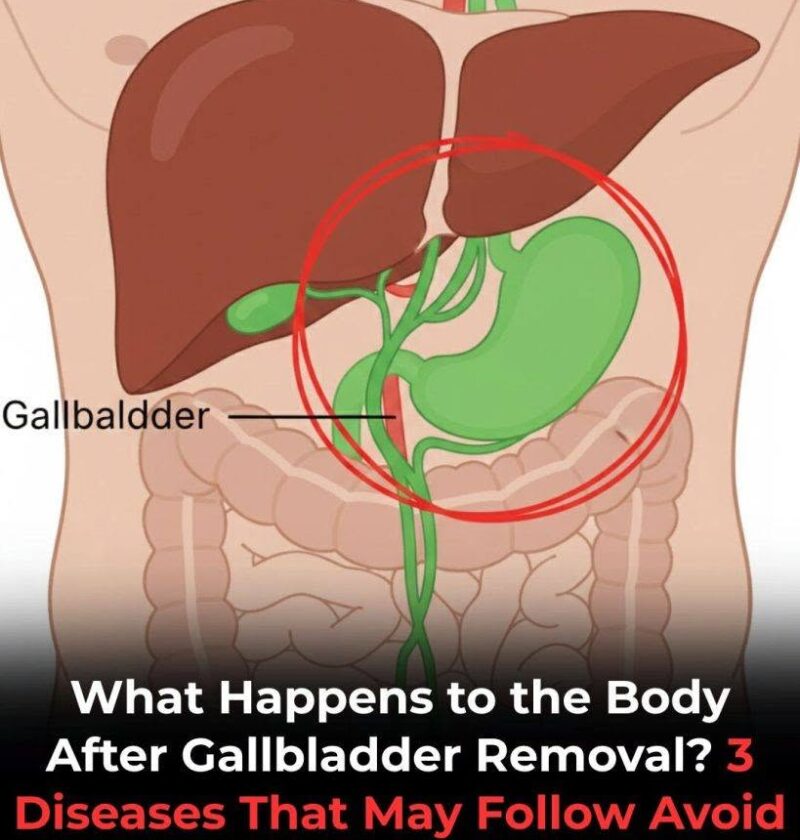
Gallbladder removal (a surgery called cholecystectomy) is usually done when the gallbladder is inflamed, full of stones, or causing repeated attacks of pain. Many people recover well and live normally afterward, but the digestive system does have to adjust because one storage organ for bile is gone.
What actually changes in the body
The gallbladder normally stores and concentrates bile, then releases it in a controlled burst when you eat fatty food. After removal, bile from the liver flows continuously into the small intestine instead of being stored. Most people adapt to this, but in some cases it can lead to ongoing digestive symptoms.
3 conditions that may follow gallbladder removal
1) Postcholecystectomy syndrome
This is a broad term for symptoms that continue or appear after surgery.
It can include:
- Upper abdominal pain similar to gallbladder pain
- Bloating and indigestion
- Nausea or intolerance to fatty foods
- Sometimes reflux-like symptoms
It doesn’t mean something is “wrong” with the surgery itself—rather, it reflects how the body is adapting or other hidden digestive issues (like bile duct problems or gastritis).
2) Bile acid diarrhea
Without a gallbladder, bile can drip continuously into the intestines. In some people, excess bile reaches the colon and acts like a laxative.
Possible symptoms:
- Frequent loose stools or urgency
- Diarrhea after fatty meals
- Cramping or discomfort
This is one of the more common long-term changes, but it often improves with diet adjustment or medication that binds bile acids.
3) Sphincter of Oddi dysfunction
The Sphincter of Oddi is a muscle that controls bile flow into the intestine. After gallbladder removal, some people develop abnormal spasms or pressure problems here.
Possible effects:
- Recurrent upper abdominal pain
- Pain after eating (especially fatty meals)
- Nausea, sometimes abnormal liver/pancreatic tests
It can mimic gallbladder pain even though the gallbladder is already removed.
Important reality check
The idea that you should “avoid surgery if possible” is not always accurate. If the gallbladder is causing severe infections, blocked ducts, or repeated attacks, delaying surgery can actually increase risk (including pancreatitis or emergency surgery). In those cases, cholecystectomy is usually the safest long-term option.
Bottom line
Most people do not develop serious diseases after gallbladder removal. When problems do occur, they usually involve bile flow adjustment or digestive sensitivity—and they are often manageable.
If you want, I can also break down:
- who is more likely to get these complications
- how diet changes reduce symptoms
- or what warning signs mean you should see a doctor after surgery