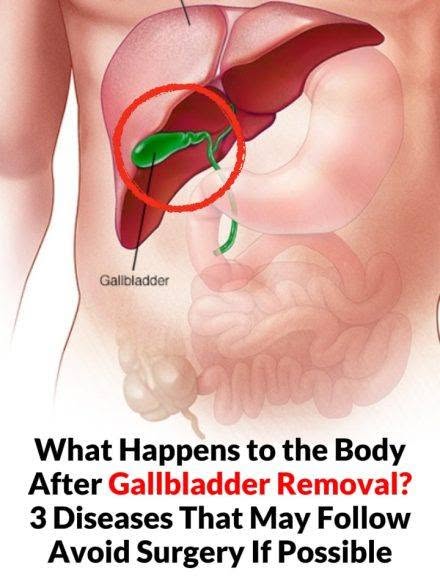
Gallbladder removal (cholecystectomy) is a common surgery, usually performed for problems such as gallstones causing pain, inflammation, or blocked bile ducts. The claim that you should “avoid surgery if possible” is not true for everyone—when surgery is medically necessary, delaying it can lead to serious complications. However, it is reasonable to understand the possible changes after gallbladder removal.
What happens to the body after gallbladder removal?
The gallbladder stores bile made by the liver and releases it when needed, especially after eating fatty foods. After removal:
- The liver continues making bile.
- Bile flows directly into the small intestine instead of being stored.
- Most people digest food normally and return to regular activities.
Possible issues that may occur after surgery
1. Diarrhea or changes in bowel habits
Some people develop:
- Loose stools
- More frequent bowel movements
- Urgency after meals
This can happen because bile enters the intestine continuously and may irritate the colon in some people.
Helpful steps:
- Eat smaller meals
- Increase fiber gradually
- Reduce very fatty or greasy foods if they trigger symptoms
2. Bile-related digestive symptoms
Some people experience:
- Bloating
- Gas
- Indigestion
- Discomfort after high-fat meals
These symptoms often improve over time and can usually be managed with dietary adjustments.
3. Rare long-term complications
Less common issues can include:
- Bile duct injury or narrowing (usually related to the surgery itself)
- Remaining or new bile duct stones
- Persistent abdominal pain requiring further evaluation
Can gallbladder removal be avoided?
Sometimes, depending on the situation:
- Silent gallstones (no symptoms) often do not require surgery.
- Mild symptoms may be managed with dietary changes and medical guidance.
- Recurrent painful attacks, gallbladder inflammation, infection, or complications often make surgery the safest option.
After gallbladder removal, healthy habits can help:
- Maintain a balanced diet
- Limit very fatty meals if they cause symptoms
- Keep a healthy weight
- Stay physically active
- Follow up with your healthcare provider if symptoms persist
If you have gallstones or are considering surgery, the decision depends on factors such as your symptoms, ultrasound findings, history of attacks, and risk of complications—not simply whether the gallbladder can be left in place.