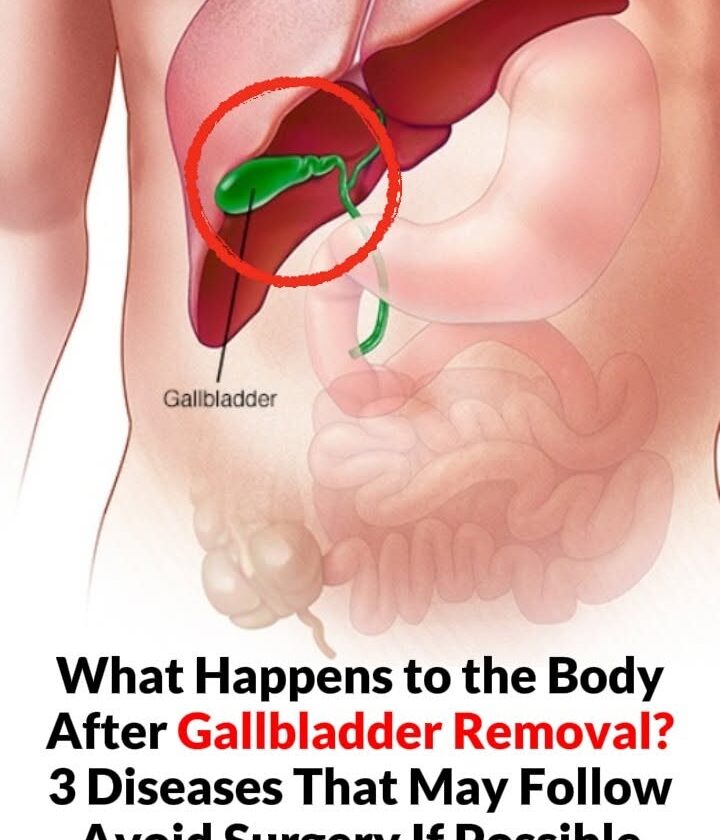
The headline “What Happens to the Body After Gallbladder Removal? 3 Diseases That May Follow – Avoid Surgery If Possible” is misleading. Gallbladder removal can have side effects, but there is no good evidence that removing the gallbladder routinely causes three specific diseases or that people who medically need the operation should avoid it. (nhs.uk)
🟢 What actually happens after removal?
The gallbladder stores bile made by the liver. After it is removed, bile simply flows more continuously from the liver into the intestine instead of being stored in the gallbladder. You can live normally without a gallbladder. (nhs.uk)
Most people eventually return to a normal diet and don’t have major long-term problems. (nhs.uk)
Possible problems after surgery
Some people experience:
- Diarrhea or more frequent stools — usually temporary, although a small number of people can have persistent diarrhea. (NIDDK)
- Indigestion, bloating, nausea or abdominal discomfort — sometimes called post-cholecystectomy syndrome. (nhs.uk)
- Persistent pain or symptoms — sometimes the original symptoms continue because they were caused by another digestive problem rather than the gallstones. (Royal Free London)
There are also uncommon surgical complications, including infection, bleeding, bile leakage, blood clots, or injury to the bile ducts or nearby organs. These are recognized risks, but gallbladder removal is generally considered a safe and common operation. (nhs.uk)
⚠️ Should you “avoid surgery if possible”?
Not necessarily. It depends on why the gallbladder is being removed.
- Silent gallstones that aren’t causing symptoms often don’t require surgery. (nhs.uk)
- Recurrent painful gallstone attacks, gallbladder inflammation, bile-duct obstruction, or complications such as gallstone pancreatitis may make surgery the appropriate treatment. Untreated obstruction can lead to serious complications. (NIDDK)
So the better message is: don’t have gallbladder surgery unnecessarily, but don’t avoid medically indicated surgery because of frightening social-media claims.
If you’re considering gallbladder removal, tell me what your ultrasound/scan showed and what symptoms you’re having, and I can explain whether surgery is typically recommended in that situation.